Our Sevices

Services Hub Riyadh

Define what you need first

The Risys services hub Riyadh helps you choose the right operational path before a systems project starts, changes, or needs support — from the site survey and engineering design to supply, installation, configuration, testing, handover, and follow-up. The services hub Riyadh covers every stage clearly inside Riyadh. Learn more about Solutions.
Free site survey inside Riyadh:
For projects that need a technical review before any recommendation is made.
First, specify · Then ask

Where are you in the project path?

This first decision matters more than choosing a device. Pick the stage you are at, and the next step — survey, installation, support, or rental — becomes clear without guesswork.

Start a project in Riyadh, with precise planning

No system is installed yet. You need a site survey, design, model selection, supply, and documented installation.
A · New project

The execution stage, after the project study

Devices are selected, but installation, cabling, configuration, testing, or handover still need to be delivered under clear responsibility.
B · Project in progress

The stage that matters most: after handover

You are past handover and need fault response, preventive maintenance, or service continuity.
C · Existing system

An urgent, short-term, or event-driven need

Equipment rental from Risys, for a project or a transition period — not a permanent installation.
D · Temporary need
// Suggested next step

Start with a free survey inside Riyadh

A technical site review before any model is chosen. No commitment, and no device pricing at this stage.
Start Your Path
Why Start with the Website?

How to be sure the model you choose
is the best fit for your need

You cannot correctly choose a camera model, access reader, access point, PBX unit, intercom station, or smart panel before knowing where it will be installed, how it will be used, and what the site can support.
Common mistake

Ask for the device price first.

Skip the site review. Pick a model from a spec sheet. Order. Install. Then discover the problems after execution.
  • Camera angles change after installation starts.
  • Cable routes turn out harder than expected.
  • Network coverage does not match the site layout.
  • User permissions are not ready at go-live.
  • The client expects maintenance, while the agreement covers post-installation follow-up only.
// The result: rework, delays, mismatched scope, and a weak handover.
The Risys path

Define the path. Then choose the right device.

Survey first. Documented design. Models chosen to fit the site, the budget, and the operating goal. Supply, installation, configuration, testing, handover, and follow-up.
  • The site determines mounting locations, not the spec sheet.
  • Cable and power routes are mapped before any device is ordered.
  • Network readiness is checked against the site layout.
  • Users, permissions, and training are part of handover.
  • Maintenance and rental are routed to their proper path — separate from the initial handover.
// The result: a usable system at acceptance, not just a list of installed devices.
Risys Approved Workflow

Because we choose what fits your project best — in cost and in operation

The value is not in having execution stages — most companies claim those. The real value is in the working sequence we commit to: a considered design before execution, rigorous testing before acceptance, and a documented handover before the project is closed.
Free survey inside Riyadh
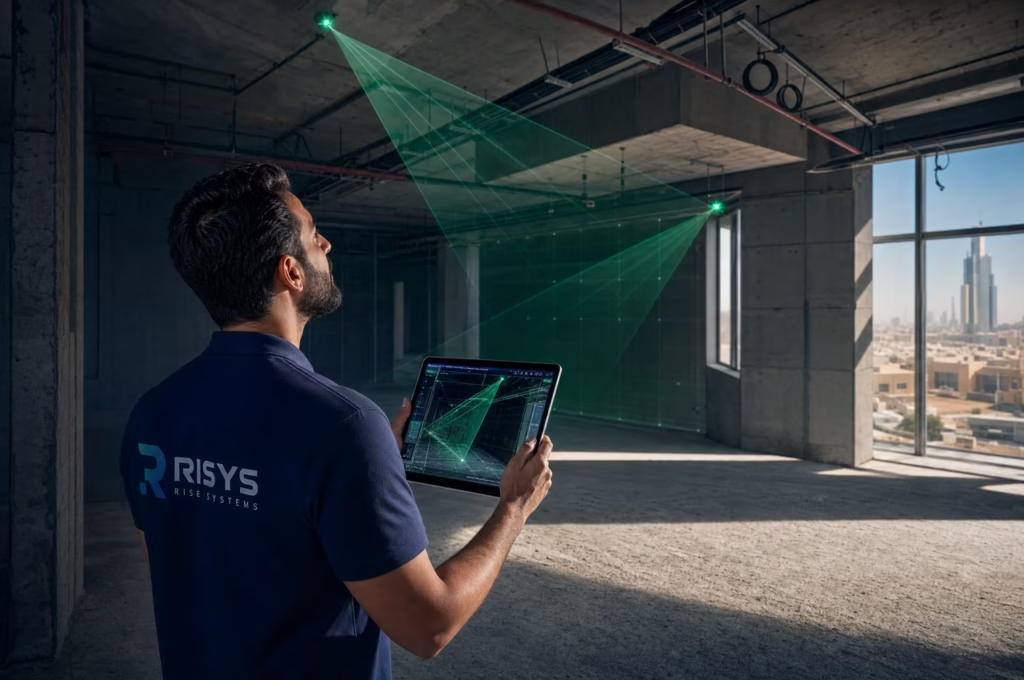
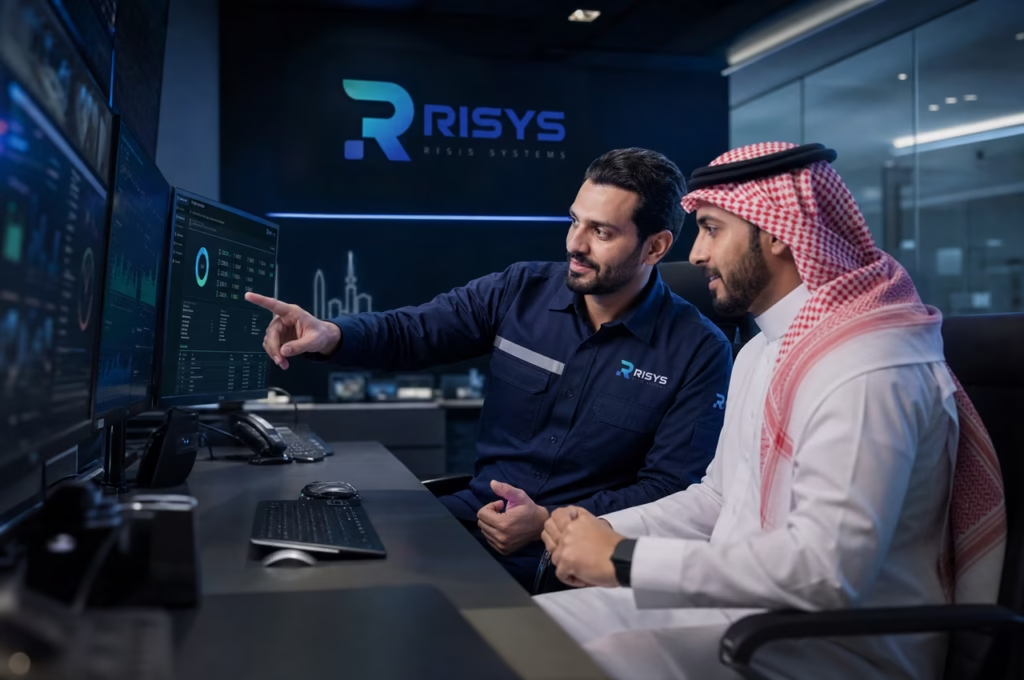
Risys Site Survey Engineer

Site survey

Risys provides a free site survey inside Riyadh for projects that need a technical review before any recommendation or pricing. The survey clarifies the site type, the required coverage, mounting points, cable routes, power availability, network readiness, and how the client will operate the system after handover.

This step matters most in CCTV, access control, intercom, networks, PBX systems, audio systems, smart homes, BMS, and vehicle solutions — every system looks simple at the device level, but real quality is built on correct placement, connectivity, configuration, testing, and operator handover.
The survey is not a sales pitch — it is a technical gateway that prevents rushed, mismatched orders.
Engineering design

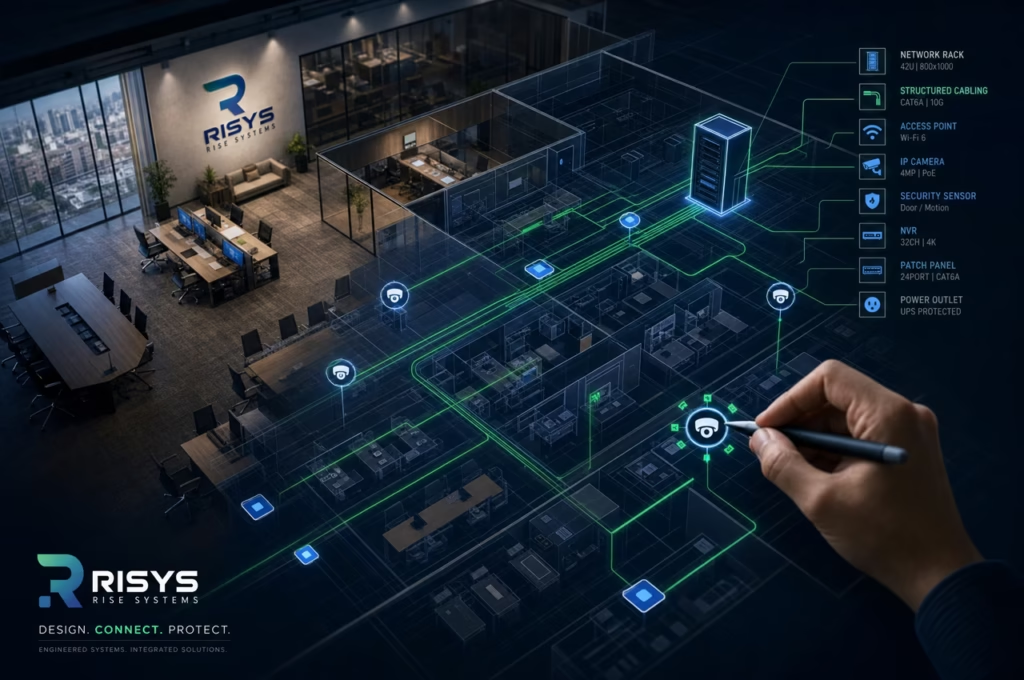
After the survey comes the engineering design stage — turning the site's needs into an executable plan. Device locations, cable routes, network points, control points, power requirements, integration needs, rack location, user permissions, and the practical sequence of execution.

Design reduces improvisation during installation. That matters when a project combines more than one system — CCTV, access control, a network, and intercom in the same office — because without design, every late decision turns into extra effort, a visual compromise, rework, or delay.
The client should know what will happen — and the technical team should know exactly what will be installed, configured, and tested.
Documented before any work
Engineering Design Blueprint Overlay
Fit for the site and the spec sheet
Model Selection Podium Check

Model selection

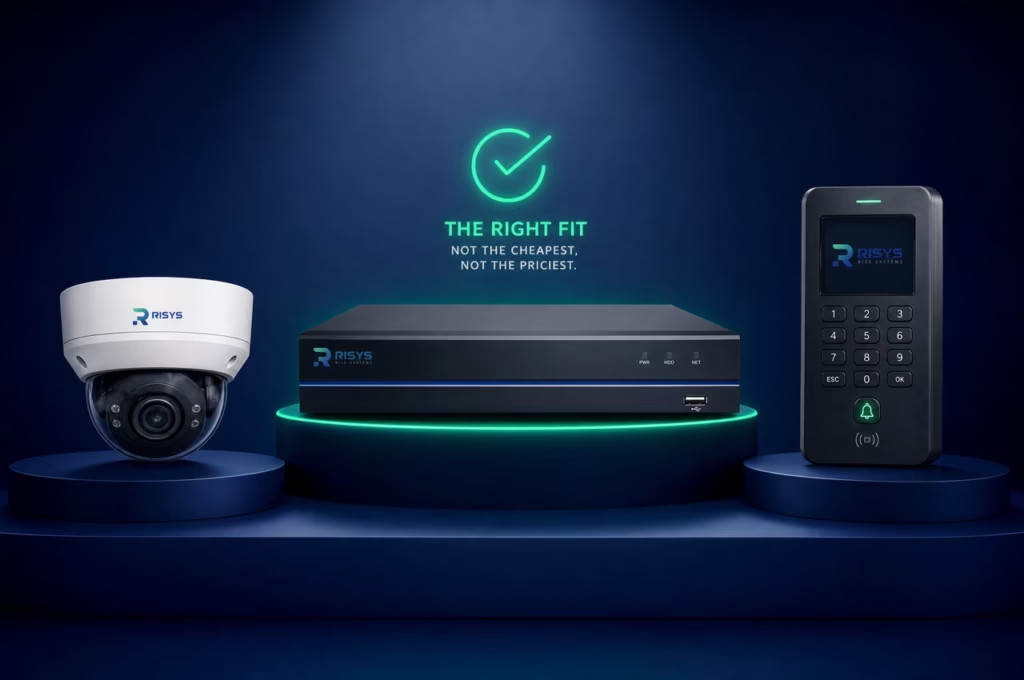
The right model is not always the most expensive, and not necessarily the cheapest. Risys selects models based on the site's needs, the budget, the warranty position, the expected pattern of use, scalability, maintenance needs, and the total cost of operation.

In some projects, a mid-range model from a trusted brand beats a low-cost device that creates support problems later. In others, higher specifications are justified — wider coverage, more storage, more users, or stronger integration.
The goal is equipment that fits the site, the budget, and how the system will be operated after installation.

Supply

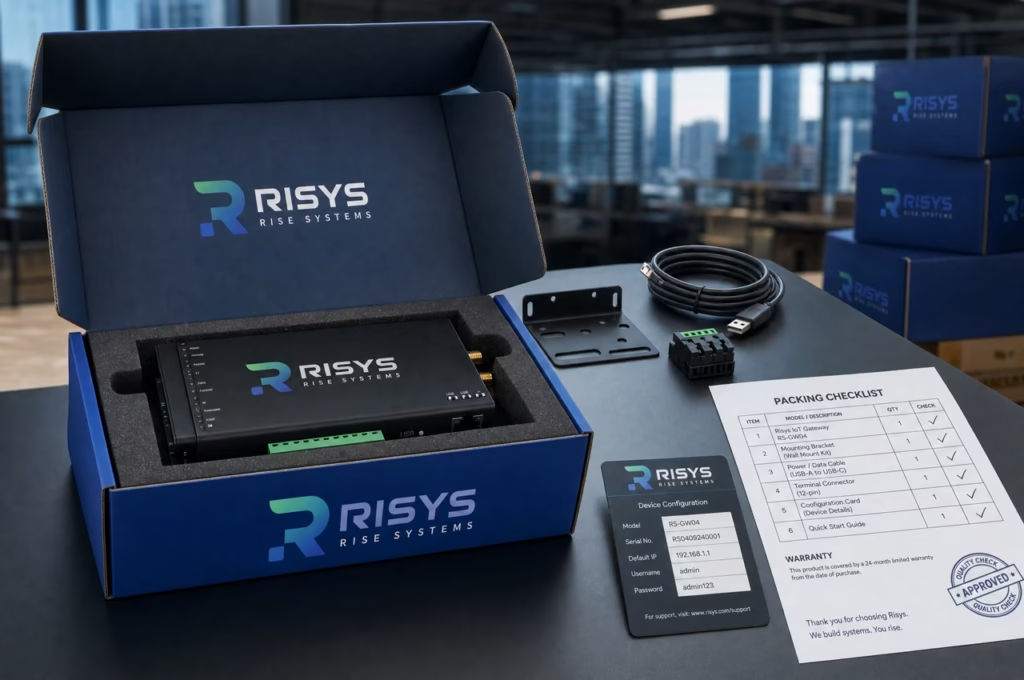
Risys supports wholesale and retail supply needs according to product type, quantity, availability, and project scope. Supply can be part of an integrated project inside Riyadh that includes installation and commissioning, or a standalone order for devices only.

For sites outside Riyadh, supply within Saudi Arabia can be discussed — but field installation and on-site support should not be assumed unless clearly agreed. Supplied devices are selected according to the specifications and standards approved by the Saudi Standards, Metrology and Quality Organization (SASO).
Good supply is more than sourcing an item: the right model, compatible accessories, accurate quantities, and warranty clarity.
Wholesale & retail · within Saudi Arabia
Supply Open Box Checklist
Disciplined delivery, clean final finish
Installation Cable Rack Macro

Installation and cabling

Once the scope is clear and the design and models are approved, the project moves to installation and cabling. Mounting devices, pulling cables, organizing routes, terminating points, arranging the rack, connecting equipment, and labelling where needed — while keeping the final finish as clean as the site allows.

Installation is not a separate task; it is part of a disciplined delivery sequence. It should follow the design, and the project is not closed before configuration, testing, acceptance, handover, and basic user guidance are complete.
Cabling quality affects performance, reliability, serviceability, and the final appearance.

Configuration and programming

Installed devices are not a ready system until they are set up and configured. In CCTV — camera settings, recording, storage, user permissions, and remote viewing. In access control — users, permissions, schedules, doors, and cards. In networks — connectivity, Wi-Fi coverage, VLAN settings, and performance checks. In PBX or intercom — extensions, call routing, devices, and permissions.

A device that works in a quick test but is not configured for daily use is not a completed handover. Risys follows global interoperability standards such as ONVIF in CCTV systems to ensure devices integrate properly.
The system must be usable by the client — not just devices with power running through them.
Running does not mean delivered
Configuration Control Room Screens
Wholesale & retail · within Saudi Arabia
Testing Handover Client Training

Testing, handover, and training

Testing confirms that the key points work, the settings are applied, users can operate the system, and the core scope has been delivered. Handover clarifies what was installed, configured, and tested — and what falls inside the current scope and what sits outside it.

Training matters because many systems fail in practice not because the devices are weak, but because the user does not know how to operate them, review recordings, manage users, or request support.
A practical handover leaves the client with operational clarity, not just installed devices.

Maintenance and operation contracts

After handover, configuration follow-up continues for one month — it is tied to the initial delivery, not an open-ended maintenance contract.

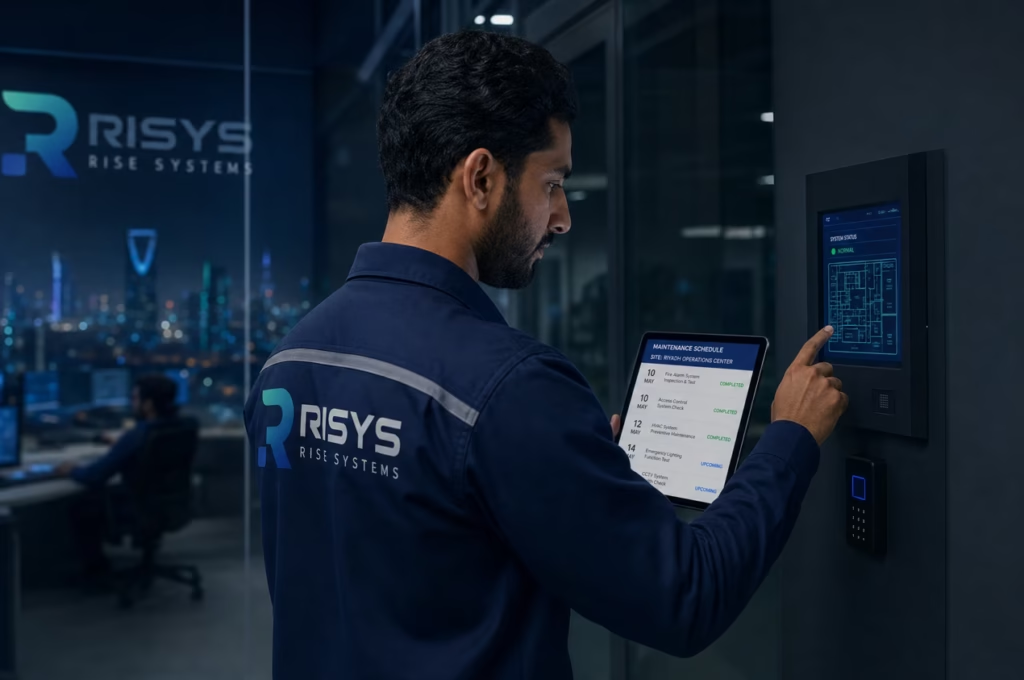
Preventive maintenance and fault support belong to the Maintenance & Support page: a defined scope, a clear schedule, and a service agreement. Temporary needs are routed to equipment rental.
First-month follow-up is not a maintenance contract. For operational continuity, requests go to Maintenance & Support.
A different page, a different scope
Maintenance Visit Schedule Panel

Field work inside Riyadh.
Supply across Saudi Arabia.

Clear boundaries are part of trust. Supplying devices is not the same as promising to send a team to survey the site, install, configure, test, and support the system in the field. Inside Riyadh, this hub is the right context. Outside Riyadh, the safe framing is to discuss supply within Saudi Arabia — not to assume field installation or on-site support by default.
Field execution

Riyadh, Saudi Arabia

Free site survey, engineering design, installation, configuration, testing, handover, training, and one month of follow-up — all delivered on site within Riyadh.
Riyadh
. Field only
Supply

Kingdom-wide

Device supply for wholesale and retail needs, based on an approved bill of materials — available across Saudi Arabia, independently of any field-installation commitment.
// Saudi Arabia // Defined by the bill of materials
. Supply only
How to Choose a Course

The services hub is a routing point
not the final destination.

If your question is narrower than the full path, one of these routes is the right fit for you.
// If your need is
// then the right path
You want to start, restart, or close out a project
Stay in Services
You want to compare CCTV, access control, networks, and smart control systems
Browse Solutions
The system exists and you need continuity and maintenance
Maintenance & Support
The need is temporary, urgent, or event-based
Equipment Rental
You want to understand the company first
About Risys
Frequently asked questions

Ten questions, answered
before you ask them.

They reflect what Riyadh visitors ask when deciding which page actually fits their request next.

  • The full operational path: the free site survey inside Riyadh, engineering design, model selection, supply, installation, cabling, configuration, programming, commissioning, testing, handover, training, routing of maintenance requests, and routing of temporary equipment rental requests.

  • Yes. Risys provides a free site survey inside Riyadh for projects that need a technical review before recommendations, model selection, or pricing. The goal is to understand the site before the client commits to devices or an unsuitable service path.

  • Yes. Design is part of the service path wherever the project requires it. The design stage defines device points, cable routes, network requirements, power needs, integration needs, and the sequence of execution — before installation begins.

  • Yes. Risys helps select suitable models based on the budget, the site's needs, the warranty position, expected use, scalability, and maintenance requirements. The best choice is the one that fits the project — not automatically the most or least expensive.

  • Yes. Wholesale or retail supply can be discussed according to product types, quantities, availability, and scope of work. In Riyadh projects, supply can be tied to installation and commissioning; outside Riyadh, supply is treated separately from field execution unless agreed otherwise.

  • No. The supported scope is field installation, surveys, commissioning, and on-site support inside Riyadh. Supply within Saudi Arabia can be discussed, but field service outside Riyadh should not be assumed.

  • After installation, the service path moves to configuration, programming, commissioning, testing, handover, and user training where needed. The goal is to hand over a usable system — not just installed devices.

  • Yes. Preventive maintenance and fault support can be discussed for existing systems that need operational continuity, periodic checks, or issue resolution. For that path, use the Maintenance & Support page — not this services hub.

  • When the need is time-bound: an event, a short-term site, a temporary office, an urgent surveillance need, or project-linked operation. Rental decision criteria — duration, speed, site access, installation method, and the return process — differ from permanent installation criteria.

  • Use the Solutions page when you want to browse system families — CCTV, access control, networks, intercom, audio systems, PBX, smart homes, building management, and vehicle solutions — before choosing a service path.

Start with the free site survey inside Riyadh.

Email us at sales@risys.sa with your site type, the need, the current state of the project, and whether the requirement is permanent or temporary. The team will route you to the right path — survey, design, supply, installation, preventive maintenance, or rental.
Contact Us Now