
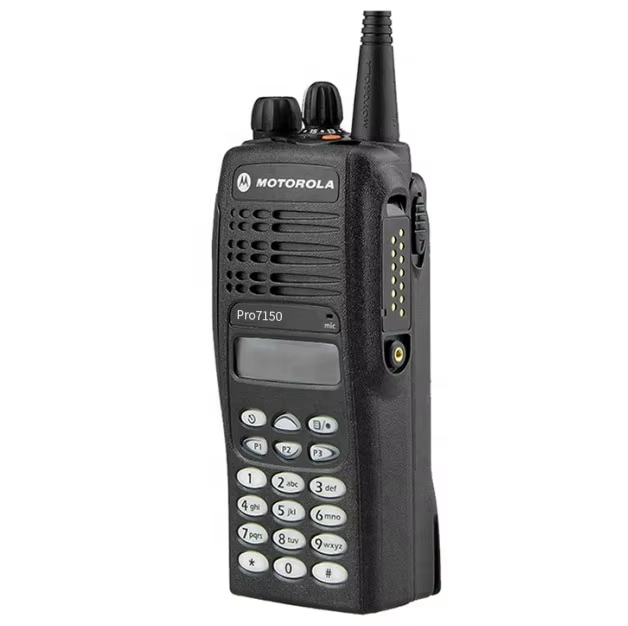
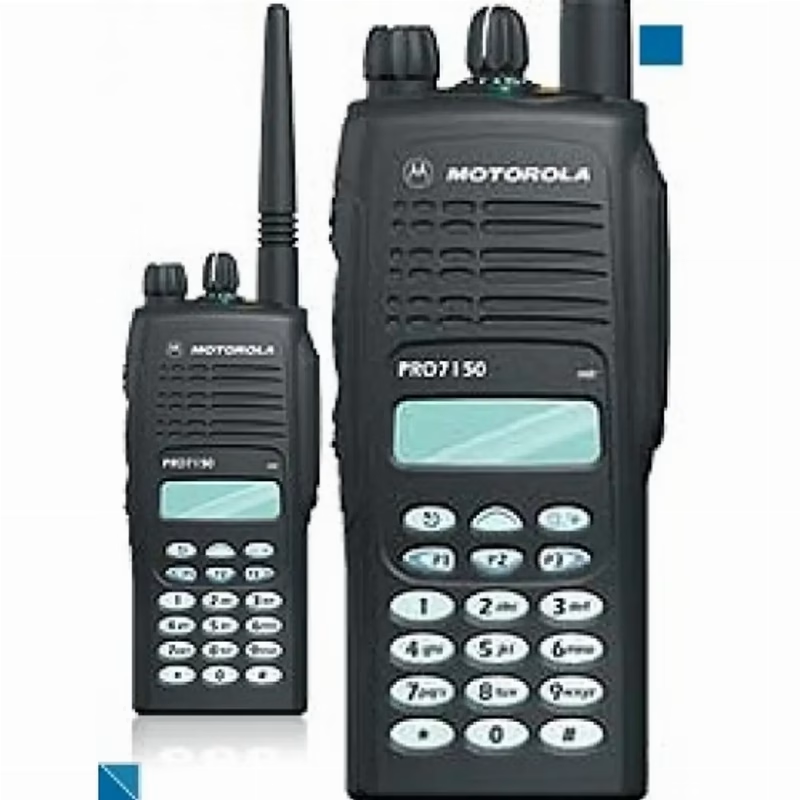
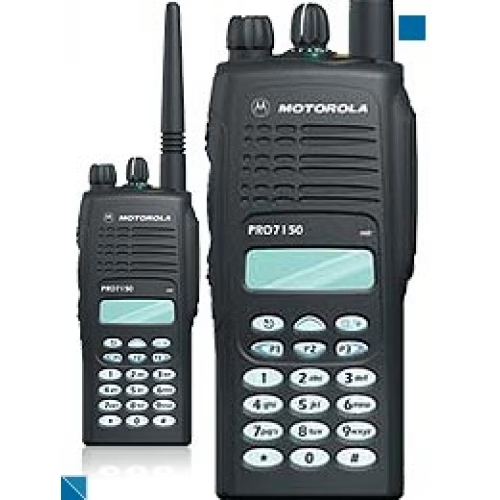
Motorola PRO7150 Analog Two-Way Radio, 128 Channels
An analog portable radio offered for VHF or UHF operation, with 128 conventional channels and trunked-system organisation. It includes a 14-character alphanumeric display, DTMF keypad, and IP54 protection.
Original price was: 2,748.50 SAR.2,610.50 SARCurrent price is: 2,610.50 SAR. incl. VAT
Available on backorder
RISYS can programme and prepare devices before delivery. Contact us for quantity and project details.
Wholesale and project supply — up to 45% off

Fast shipping





Genuine warranty

Secure payment





B2B/B2C supply
Up to 45% off wholesale supply.
Overview
The Motorola PRO7150 Analog Two-Way Radio centres its operational case on organising a large communications plan in one portable unit. It supports 128 conventional channels, plus 15 trunked zones with 16 talkgroups in each zone, while its 14-character alphanumeric display helps users identify the current selection. Frequency choices cover VHF from 136 to 174 MHz, UHF from 403 to 470 MHz, or UHF from 450 to 527 MHz, making the correct band version an essential purchasing decision. This structure positions PRO7150 around channel and talkgroup capacity for multi-department operations, supported by an integrated DTMF keypad and MDC, Quik-Call II, and DTMF signalling. It suits a manager whose existing system is analog and whose teams need a documented channel structure rather than a small, informal set of shared selections.
Motorola PRO7150 Analog Two-Way Radio Capabilities
PRO7150 serves teams that need to separate communications by role, location, or shift. Its 128 conventional channels can be assigned under the site’s radio plan, while the 15 trunked zones and 16 talkgroups per zone provide another way to organise users when the radio operates in a suitable trunked system. A 14-character alphanumeric display gives room for concise identifiers that help an operator check the active choice before transmitting. The built-in DTMF keypad puts tone entry on the radio interface and sits alongside the stated MDC, Quik-Call II, and DTMF signalling options.
The radio uses analog technology, so a communications manager should confirm the existing system type before treating channel capacity as the deciding factor. Where an operation relies on analog communications and needs clear separation between user groups, PRO7150 provides the controls to support that structure. The large count works best with a documented naming and responsibility plan. Each channel or talkgroup can be associated with a department and an internal operating instruction. The display and keypad help the user follow the plan, while channel configuration and assignment remain part of the site’s authorised radio-management process.
Choosing the Frequency Band and Output
The VHF version covers 136 to 174 MHz and provides 1 to 5 W output. The UHF choices cover 403 to 470 MHz or 450 to 527 MHz and provide 1 to 4 W. These are alternatives to match with the site’s radio network and equipment, not a reason to treat VHF and UHF as one simultaneous operating choice. Procurement can identify the band already used by the fleet and then select the applicable frequency and power version according to the system design and the site’s established coverage plan.
Supported channel spacing is 12.5, 20, and 25 kHz, providing another parameter to match with the operating network. Rated audio is 0.5 W. The evaluation can therefore separate three decisions: required frequency version, transmit-power level, and channel spacing. This sequence prevents selection based only on the channel count, because successful fleet entry also depends on those parameters matching the system in service. Recording them on the purchase line and asset entry helps receiving staff issue the intended version to the field team.
Battery Runtime and Daily Carry
PRO7150 uses a 7.5 V rechargeable battery. At high transmit power and a 5/5/90 duty cycle, stated battery life is 11 h for VHF and 8 h for UHF. These values help a shift manager compare the planned task duration with the defined operating profile, while keeping the figures tied to their band, high-power setting, and duty cycle. A handover process can identify the actual radio version, check battery condition before issue, and define the point at which units return for charging after the assignment.
The radio measures 137 x 57.5 x 37.5 mm without its clip and with the high-capacity battery, and it weighs 420 g. An asset coordinator can use the dimensions to plan an issue case or storage position and include the weight when preparing equipment carried through a shift. Because the measurement applies to the stated battery configuration and excludes the clip, that context should remain beside the figures during comparison. Doing so avoids treating the dimensions as if they describe every possible battery or accessory arrangement.
Protection and Durability at the Facility
PRO7150 carries an IP54 rating and meets MIL-STD 810C/D/E. Procurement and safety teams can include both points in the site’s equipment review while treating each as a separate criterion: the IP value defines the stated ingress-protection class, while the MIL-STD series identifies the durability standards listed for the model. The practical decision is to compare the task environment with these boundaries before issue and avoid extending the handset rating to an accessory, battery, or operating condition outside the assessed radio configuration.
For daily control, the inspection routine can connect the model name with the housing, display, keypad, and rechargeable battery. Clear channel identification reduces the need for an operator to move through unrelated choices during a task. If a radio transfers between departments, its channel plan and associated instructions can be updated with the asset assignment instead of relying on the previous user’s memory. This practice combines the organisational capacity of PRO7150 with a management process suited to sites where teams and responsibilities change.
Saudi-Sector Uses for PRO7150
At an industrial facility, conventional channels can separate security, maintenance, and operations, while talkgroups can be organised inside trunked zones according to the system design. At a facilities complex, the alphanumeric display can carry concise department or location identifiers. Warehouses and logistics centres can associate channels with receiving, storage, and loading areas. Event or site-management teams can use the DTMF keypad and signalling within their approved communications procedure. In every case, deployment should follow a check of frequency band, analog system fit, channel spacing, and the naming plan users will follow.
The stated runtime can support shift planning when read with the VHF or UHF version and 5/5/90 duty cycle. A supervisor can document issue and return time while keeping the rechargeable battery associated with its radio. Weight and dimensions also support locker and issue-case management. These uses do not derive value from a large channel count alone. The value appears when the organisation turns channels, zones, and talkgroups into a structure users can understand, reinforces it with clear labels, and supports it through suitable internal instruction.
PRO7150 Compared with Family Members
PRO7150 differs from GP328 and GP340 in its available channel arrangement, while DP3661E, DP4800, and DP4801EX differ from it in channel count and ingress rating. Values should remain attached to the individual model rather than moving across the Motorola family. For PRO7150, the defining points are 128 conventional channels, its trunked-zone structure, 14-character display, analog operation, and IP54. It also has a different function from PMMN4007A and RKN4075 because those names sit in the operating-accessory or programming workflow rather than representing this portable radio.
This position makes PRO7150 relevant to a buyer prioritising channel organisation in a compatible analog network, with a display, DTMF keypad, and defined signalling options. If another site prioritises a different ingress class or channel count, the sibling model should be assessed on its own values. A sound comparison begins with system technology and band, then moves to plan capacity, user interface, protection, and battery. Channel count then becomes a useful decision axis without obscuring the other requirements for deployment.
Setup and Receiving Notes
Before ordering, the team can specify the VHF or UHF version and its range, followed by the required transmit output and channel spacing. At receiving, staff can match PRO7150, the 14-character display, built-in DTMF keypad, IP54 rating, and 7.5 V battery to the item entry. The organisation can then build its channel, zone, and talkgroup plan with names that reflect departmental work. Version-specific runtime can enter the shift procedure, while dimensions and weight inform storage and carry preparation. This sequence connects the radio’s specifications with purchasing, configuration, and issue decisions instead of treating it merely as a high-channel-count handset.
Technical Specifications
- Brand
- Motorola
- IP Rating
- IP54
- Channels
- 128
- Frequency Band
- Dual Band (VHF/UHF)
- Power Output
- 5 W
- Radio Technology
- Analog
- Model
- PRO7150
- Battery Details
- 7.5 V rechargeable battery
- Display
- 14-character alphanumeric display
Frequently Asked Questions
How many channels does the Motorola PRO7150 support?
It supports 128 conventional channels, plus 15 trunked zones with 16 talkgroups in each zone.
Which frequency ranges and power levels are available?
VHF covers 136 to 174 MHz at 1 to 5 W; UHF covers 403 to 470 MHz or 450 to 527 MHz at 1 to 4 W.
What is the stated PRO7150 battery life?
At high power and a 5/5/90 duty cycle, it is 11 h for VHF and 8 h for UHF.
Which display and signalling features does it have?
It has a 14-character alphanumeric display, a DTMF keypad, and MDC, Quik-Call II, and DTMF signalling.
What are the protection rating and weight?
PRO7150 is rated IP54, meets MIL-STD 810C/D/E, and weighs 420 g.

Motorola
Motorola Solutions is a safety and security technology company making two-way radios, radio systems, video security and command-center software.
Browse brand productsShipping, Warranty and Regulatory
Delivery inside Riyadh
Clear warranty
Some devices or frequencies may require a permit or approval depending on the intended use and the regulations in force in the Kingdom. Requirements are clarified before project orders are fulfilled.
Customer Reviews
No ratings yet for this product
Only logged in customers who have purchased this product may leave a review.
Related Products
Kenwood TK-3207 UHF Handheld Radio – 16-Channel
On backorder
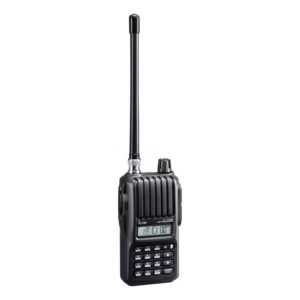
Icom IC-V80 VHF Amateur Handheld Radio 207 Channels
On backorder
Baofeng BF-R5 UHF Handheld Radio 16 Channels
On backorder
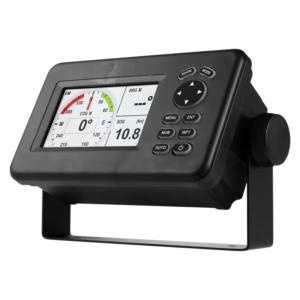
Matsutec HP-528A Marine AIS Transponder & GPS Plotter
On backorder
Reviews
There are no reviews yet.