
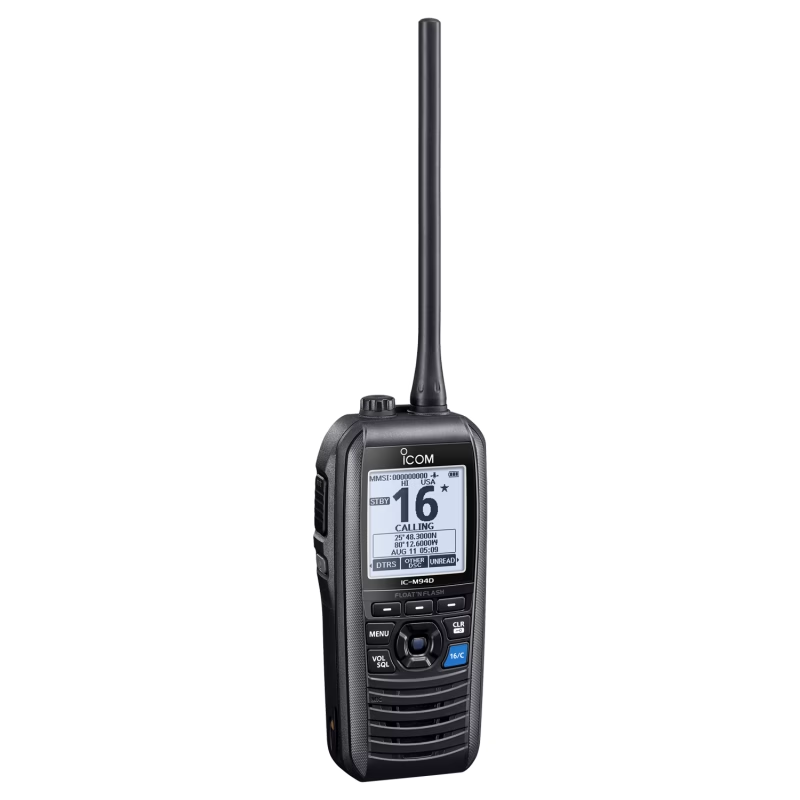
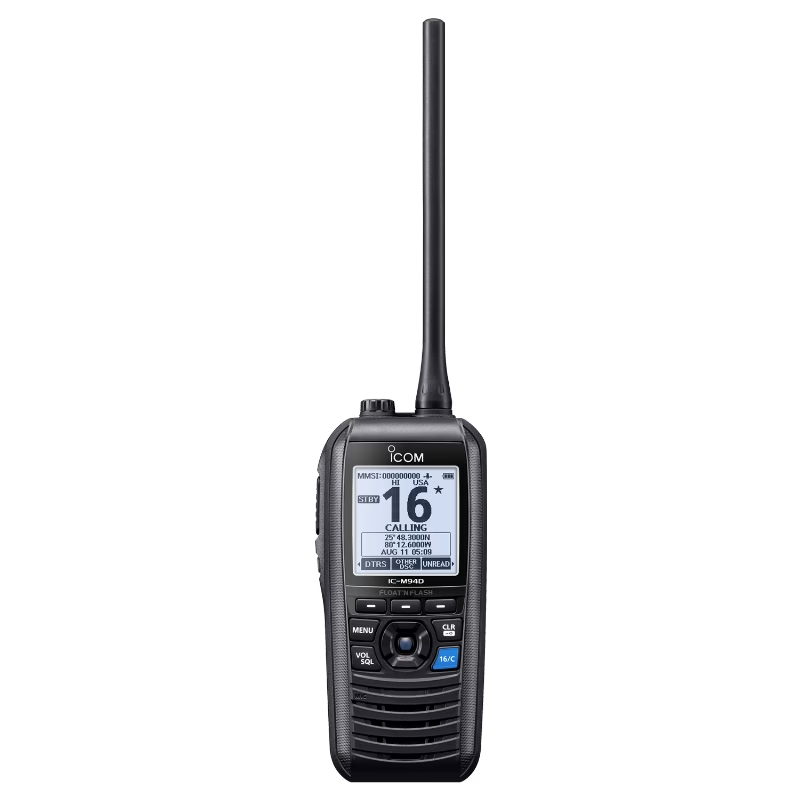
Icom IC-M94D Handheld Marine VHF Radio with AIS
The Icom IC-M94D combines marine VHF voice at up to 6 W with an AIS vessel-traffic display, GPS, and Class-H DSC. IPX7 protection, Float’n Flash, and active noise canceling support teams working aboard boats and around docks.
Original price was: 1,437.50 SAR.1,365.05 SARCurrent price is: 1,365.05 SAR. incl. VAT
Available on backorder
RISYS can programme and prepare devices before delivery. Contact us for quantity and project details.
Wholesale and project supply — up to 45% off

Fast shipping





Genuine warranty

Secure payment





B2B/B2C supply
Up to 45% off wholesale supply.
Overview
Icom IC-M94D Handheld Marine VHF Radio with AIS serves crews that need more than voice communication while working on the water. It combines analog FM voice at 6 W high or 1 W low with an AIS receiver and vessel-traffic display, an integrated GPS receiver, and digital Class-H DSC. Its defining practical benefit is the ability to view an AIS target and initiate a DSC call to that target from the same handheld used for voice traffic. The LCD supports 4-digit channel numbers, while active noise canceling and 1500 mW typical internal-speaker output help make received calls usable around engines, wind, and dock activity. IPX7 protection, Float’n Flash, and automatic MOB setting add a clear recovery path if the radio enters the water during a task.
How the Icom IC-M94D Handheld Marine VHF Radio with AIS Supports Decisions
The AIS receiver listens at 162.025 MHz and presents vessel targets on the radio’s LCD. When a user needs to contact a displayed target, AIS target calling through DSC turns traffic awareness into a defined communication action. The DSC receiver operates at 156.525 MHz under Class-H, while the radio transmits across 156.025–157.425 MHz and receives across 156.050–163.275 MHz. This combination is useful for a supervisor who wants personnel to carry one device for marine voice, nearby vessel awareness, and position-related functions. Integrated GPS supplies position information, and waypoint guidance can direct the user toward as many as 50 favorite waypoints. A team can prepare recurring operational points, such as a berth, assembly position, or coastal facility entrance, before the radio is issued.
The radio includes INT, USA, CAN, and WX channel groups. Deployment staff can select the group appropriate to the operating procedure and location, then brief users on the channels assigned to the task. Dualwatch and Tri-watch support monitoring priorities while the handheld remains ready for calls. Supported emission types are 16K0G3E for FM voice, 16K0G2B for DSC, and 16K0GXW for GMSK. These details give a communications manager concrete points for matching the handheld to a marine radio plan. They also help distinguish the roles on the device: analog FM carries voice, DSC handles digital calling, and AIS supplies received vessel-traffic information.
Voice and Power During Marine Shifts
The transmitter provides two defined output settings: 6 W high and 1 W low. Users can select the appropriate level under the team’s operating procedure and current task. The internal speaker produces 1500 mW typical into 8 ohms, and the external-speaker path produces 350 mW typical into 8 ohms, both measured at 10% distortion. Active noise canceling addresses the practical problem of voice use near engines, wind, or working equipment. When planning issue points, a manager can use the internal speaker for direct handheld operation or account for the lower rated output of the external-speaker path where an external audio setup is part of the station.
Power comes from the BP-306 7.2 V Li-ion pack, rated at 2280 mAh minimum and 2400 mAh typical. Approximate operating time is 10 hours under a 5:5:90 duty cycle with power save enabled, giving shift planners a documented baseline to compare with the intended shift length and transmission pattern. Charging takes approximately 3.5 hours with the BC-251 charger. A practical rotation can return radios to a fixed charging point between shifts and provide another charged unit where duty duration or transmit activity is expected to exceed the test basis. At 7.2 V DC, current drain during transmission is 1500 mA at 6 W and 700 mA at 1 W. At maximum received audio, approximate drain is 700 mA through the internal speaker or 350 mA through the external speaker. These figures show why transmit level and audio use matter when a team plans battery rotation.
Fit for Saudi Ports, Marinas, and Coastal Operations
The IC-M94D can support marina operations, dock supervisors, service-boat crews, and security or maintenance personnel moving between a coastal facility and a vessel. In a marina, AIS lets the user view vessel targets while VHF voice remains in hand. On a service boat, GPS and waypoint guidance support return to prepared operational points, and Dualwatch or Tri-watch can monitor communications according to the team’s plan. Around a working dock, active noise canceling and the internal speaker output help personnel receive calls amid surrounding activity. These functions do not replace a clear radio procedure; they give the operations manager specific capabilities to incorporate into channel, calling, and response instructions.
The model is positioned around the combination of vessel awareness, digital calling, and portable voice. If a role only requires brief voice calls from a fixed point, AIS, GPS, and DSC may not be central to that user’s daily task. When a person moves aboard a boat or along a dock and needs to view AIS targets, determine position, and initiate a DSC call, the IC-M94D keeps those actions on the handheld already assigned for voice. The AIS function is a receiver with a vessel-traffic display, while marine voice remains analog FM. That distinction helps a buyer assign the radio correctly: it is a handheld marine communications device with awareness and calling tools, rather than a stand-alone traffic display.
Water Protection, Recovery, and Deployment
IPX7 protection covers submersion to 1 m for 30 minutes. Float’n Flash keeps the radio afloat and makes it flash after entering the water, while MOB auto set establishes the man-overboard function. AquaQuake helps clear water from the speaker area after recovery. These capabilities can become a simple field procedure: attach the radio to the user with the MB-133 belt clip or hand strap, retrieve it promptly if dropped, activate the water-drain function, and check audio before returning it to service. The radio was tested to MIL-STD-810G methods 500.5–516.6 and also meets equivalent MIL-STD-810C, MIL-STD-810D, MIL-STD-810E, and MIL-STD-810F methods, giving asset teams a defined durability reference for the unit.
The operating-temperature range is −20°C to +60°C. Dimensions are 60.9 × 145.8 × 43.8 mm excluding projections, and weight is 357 g with the BP-306 battery, antenna, and MB-133 belt clip. These values help deployment staff choose a carrying position that does not obstruct work and verify that storage and use remain within the temperature envelope. Supplied equipment includes the BP-306 battery, BC-251 charger, a version-dependent AC adapter, CP-26 cigarette-lighter cable, MB-133 belt clip, antenna, and hand strap. Before issue, an asset team can match these items, charge the pack, configure the channel group, save required waypoints, test AIS, GPS, DSC, and audio, and record the radio in its inspection and charging routine. That preparation turns the IC-M94D into an executable part of marine operations rather than a handheld left unconfigured in storage.
Package Contents
- M94D
- BP-306 battery pack
- BC-251 battery charger
- AC adapter
- CP-26 cigarette lighter cable
- MB-133 belt clip
- Antenna
- Hand strap
Technical Specifications
- Brand
- Icom
- IP Rating
- IPX7
- Frequency Band
- VHF
- Power Output
- 6 W
- Model
- IC-M94D
- Battery Details
- BP-306 7.2 V Li-ion, 2280 mAh minimum / 2400 mAh typical
- Display
- LCD with AIS vessel-traffic display and 4-digit channel support
Frequently Asked Questions
What is the practical benefit of AIS on the Icom IC-M94D?
The AIS receiver displays vessel targets on the radio, and the user can initiate a DSC call to a displayed AIS target from the same handheld.
What output power and battery runtime does the IC-M94D provide?
The radio provides 6 W high and 1 W low output. Approximate operating time is 10 hours under a 5:5:90 duty cycle with power save enabled.
What happens if the IC-M94D falls into the water?
IPX7 covers submersion to 1 m for 30 minutes. Float'n Flash keeps the radio afloat and flashing, and AquaQuake helps clear water from the speaker area after recovery.
Which battery and charger are supplied with the IC-M94D?
It is supplied with the BP-306 7.2 V Li-ion battery, rated at 2280 mAh minimum and 2400 mAh typical, plus the BC-251 charger for an approximate 3.5-hour charge.

Icom
Icom manufactures wireless communication equipment for land-mobile, amateur, marine and aviation use, plus wireless LAN, SIP telephony and marine navigation.
Browse brand productsShipping, Warranty and Regulatory
Delivery inside Riyadh
Clear warranty
Some devices or frequencies may require a permit or approval depending on the intended use and the regulations in force in the Kingdom. Requirements are clarified before project orders are fulfilled.
Customer Reviews
No ratings yet for this product
Only logged in customers who have purchased this product may leave a review.
Related Products
Entel DX544-IS UL913 Marine VHF Handheld Radio
On backorder
Cobham SAILOR SP3520 GMDSS Marine VHF Radio
On backorder
Entel HT644 Marine VHF Radio with Full Channel Set
On backorder
GME GX700 Fixed-Mount VHF Marine Radio IPX7
On backorder
Reviews
There are no reviews yet.