
Hytera PNC360S LTE PoC Two-Way Radio (IP67)
An LTE push-to-talk-over-cellular handheld that turns 4G and Wi-Fi coverage into wide-area group voice — IP67 body, 3 W speaker, 4,000 mAh detachable battery.
1,187.95 SAR incl. VAT
Available on backorder
RISYS can programme and prepare devices before delivery. Contact us for quantity and project details.
Wholesale and project supply — up to 45% off

Fast shipping





Genuine warranty

Secure payment





B2B/B2C supply
Up to 45% off wholesale supply.
Overview
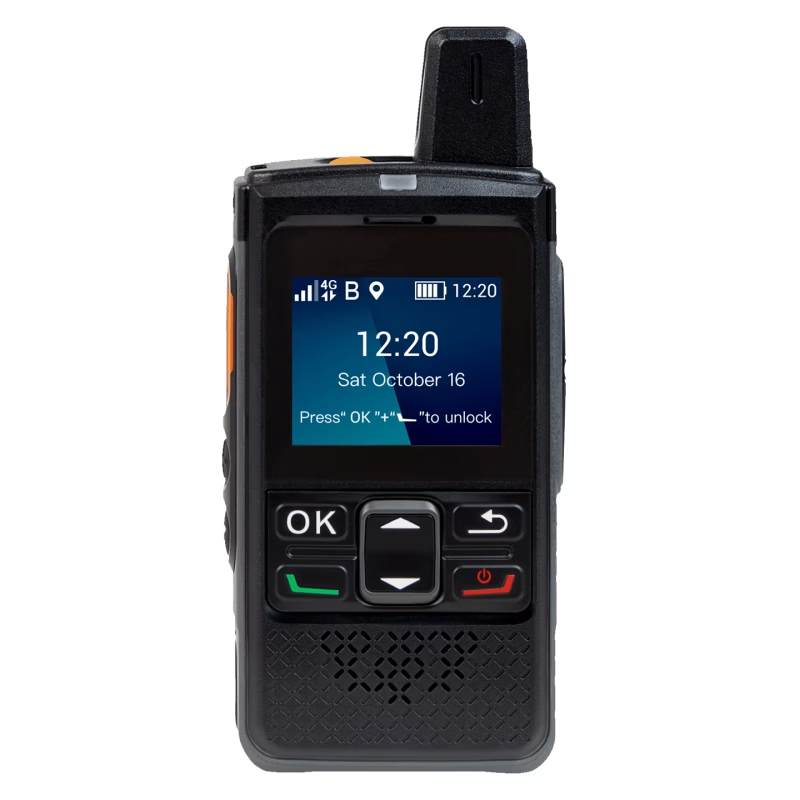
The Hytera PNC360S PoC Radio removes the two costs that complicate conventional radio fleets: repeaters and frequency licensing. Its push-to-talk calls travel over 4G/LTE cellular and Wi-Fi networks, so a supervisor in Riyadh reaches a team in Jeddah as easily as one across the corridor — and the same handset keeps working indoors, in basements and between cities, wherever a data signal exists. That wide, infrastructure-free reach is its most practical benefit for a Saudi operation. Around it, Hytera has built a genuinely field-ready handset: an IP67-sealed body, a loud 3 W maximum speaker, a 4,000 mAh detachable battery rated for up to 48 hours of duty-cycle operation, and multi-constellation positioning that keeps dispatch aware of every unit.
How the Hytera PNC360S PoC Radio Works in Practice
A single Nano-SIM connects the handset to the mobile network, and its band support is broad enough for Saudi carriers and regional roaming: GSM 850/900/1800/1900 MHz, WCDMA B1/B3/B5/B8, LTE FDD B1/B3/B5/B7/B8/B20/B26/B28 and LTE TDD B38/B39/B40/B41, with CDMA BC0 and TD-SCDMA B34/B39 also covered. Where cellular coverage thins — tunnels, plant rooms, warehouses — the unit falls back to 2.4 GHz Wi-Fi (802.11 b/g/n), so coverage follows the facility’s own wireless network. Bluetooth 4.1 pairs wireless earpieces for discreet or hands-free work. Through the PoC platform, users place one-to-one and group calls with the same press-to-talk discipline they know from conventional radios, so retraining is minimal.
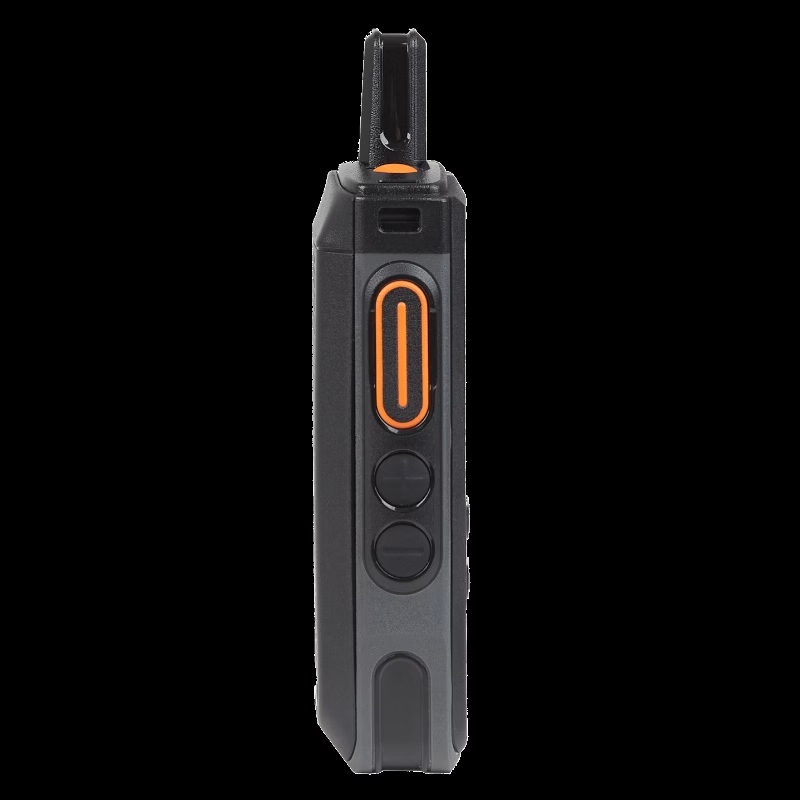
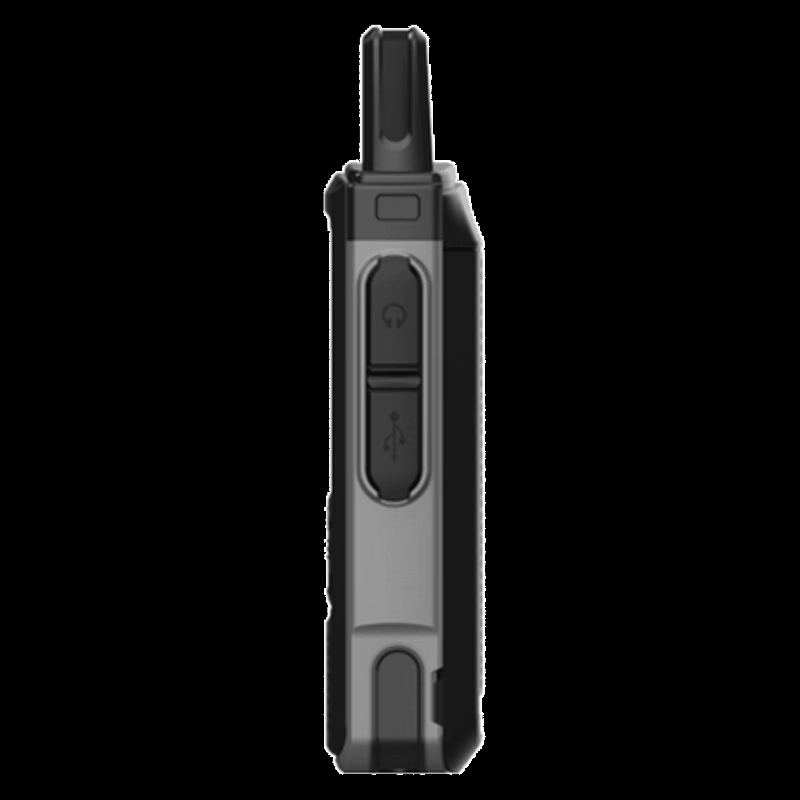
The speaker delivers 2 W rated and 3 W maximum output — loud enough for construction yards, event floors and vehicle bays. A 1.77-inch non-touch screen shows caller identity, signal and battery state at a glance and works reliably with gloved hands, while the 3.5 mm audio jack accepts standard wired headsets when privacy or noise demands them. Charging runs over USB Type-C, so the same chargers and power banks that serve the team’s phones serve the radios.
Where It Fits in Saudi Operations
The handset suits operations whose people are scattered across a site, a city or the Kingdom. Security companies coordinating patrols across several compounds get instant group calls without building repeaters at each location. Facility and hotel teams covering towers, malls and event venues keep coverage through stairwells and basements on the building’s Wi-Fi. Logistics and contracting firms moving crews between Riyadh, Jeddah and Dammam keep one talk group instead of one radio system per city. On giga-project sites already blanketed by LTE, supervisors gain voice plus location: GPS, BeiDou, GLONASS and Galileo with AGPS let dispatch see where every unit is during a shift.
For seasonal peaks — exhibitions, Ramadan retail surges, event staffing — fleets scale by activating additional SIMs rather than engineering new radio coverage, and units return to stock afterwards with no infrastructure commitments left behind.
Positioning Against Conventional Handhelds
Against a conventional UHF or VHF handheld, the trade-off is clear. A classic radio owns its coverage: it works where its signal reaches, independent of any network, but that reach ends at the repeater’s edge. The PNC360S borrows the operator’s network instead: coverage is effectively national, buildings are penetrated by Wi-Fi, and there is no frequency to license — in exchange for depending on a data SIM and the presence of cellular or wireless coverage. For multi-site businesses that already pay for connectivity, that exchange usually wins, and the handset carries CE, FCC and MIL-STD-810H certifications behind it.
Durability, Battery and Deployment Notes
The body is sealed to IP67 — dust-tight and resistant to temporary immersion — and tested to MIL-STD-810H including 1.2 m drops, suiting sites where radios get knocked off benches, rained on and left in hot vehicles. It operates from -20°C to +60°C, with storage tolerance from -30°C to +70°C, covering Saudi summer yards and cold-chain corridors alike. The 4,000 mAh lithium-polymer battery detaches, so a spare pack extends a long shift without downtime, and endurance reaches up to 48 hours on a 10/10/80 duty cycle. At 104 x 54.6 x 26.5 mm and about 190 g including the back clip, it carries on a belt like a small phone.
Deployment is an IT task rather than a radio project: activate a data plan on each Nano-SIM, enroll the units in the chosen PoC platform, and define talk groups. The handset runs Android 7.0 with 1 GB of RAM and 8 GB of storage for the PoC application, and needs no base stations, antennas or frequency coordination — a new branch joins the talk group the day its SIMs arrive, and every unit is managed and located from the same dispatcher screen.
Technical Specifications
- Brand
- Hytera
- IP Rating
- IP67
- Power Output
- 3 W
- Model
- PNC360S
- Battery Details
- 4,000 mAh lithium-polymer, detachable
- Display
- 1.77-inch non-touch TFT LCD, 160 x 128
Frequently Asked Questions
Does the Hytera PNC360S need a repeater or a frequency licence?
No. It is a push-to-talk-over-cellular device that works over 4G/LTE and Wi-Fi with a Nano-SIM data plan, so there are no repeaters to build and no frequencies to coordinate.
How long does the battery last and how is it charged?
The 4,000 mAh lithium-polymer pack is detachable, lasts up to 48 hours on a 10/10/80 duty cycle, and charges over USB Type-C.
Is the handset tough enough for outdoor sites?
It is rated IP67 against dust and temporary immersion, tested to MIL-STD-810H including 1.2 m drops, and operates from -20°C to +60°C.
Can dispatchers track where each unit is?
Yes. Built-in GPS, BeiDou, GLONASS and Galileo positioning with AGPS reports each unit's location to the dispatcher during a shift.
Which networks does the PNC360S support?
GSM, WCDMA and LTE FDD/TDD across wide band support including B1/B3/B5/B7/B8/B20/B26/B28 and B38/B39/B40/B41, plus 2.4 GHz Wi-Fi and Bluetooth 4.1.

Hytera
Hytera makes professional voice, video and data communication devices, systems and software for public safety, energy, transport, utilities and commerce.
Browse brand productsShipping, Warranty and Regulatory
Delivery inside Riyadh
Clear warranty
Some devices or frequencies may require a permit or approval depending on the intended use and the regulations in force in the Kingdom. Requirements are clarified before project orders are fulfilled.
Customer Reviews
No ratings yet for this product
Only logged in customers who have purchased this product may leave a review.
Related Products
Kirisun T60 PoC Portable Radio with LCD
In stock — Delivery within 1–3 days
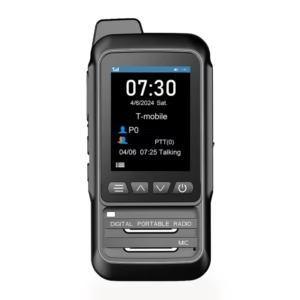
Broad Wave P0-POC 4G PoC Handheld Radio
On backorder
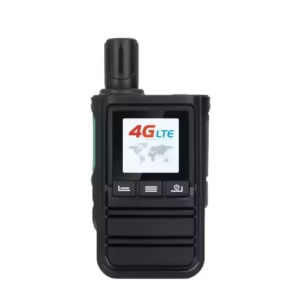
TYT IP-688 4G LTE PoC Radio with GPS
On backorder
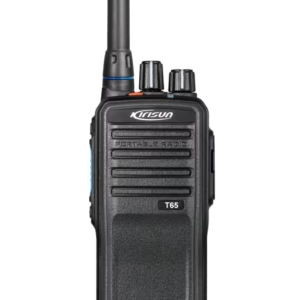
Kirisun T65 PoC Portable Radio, Display-Free
In stock — Delivery within 1–3 days
Reviews
There are no reviews yet.