
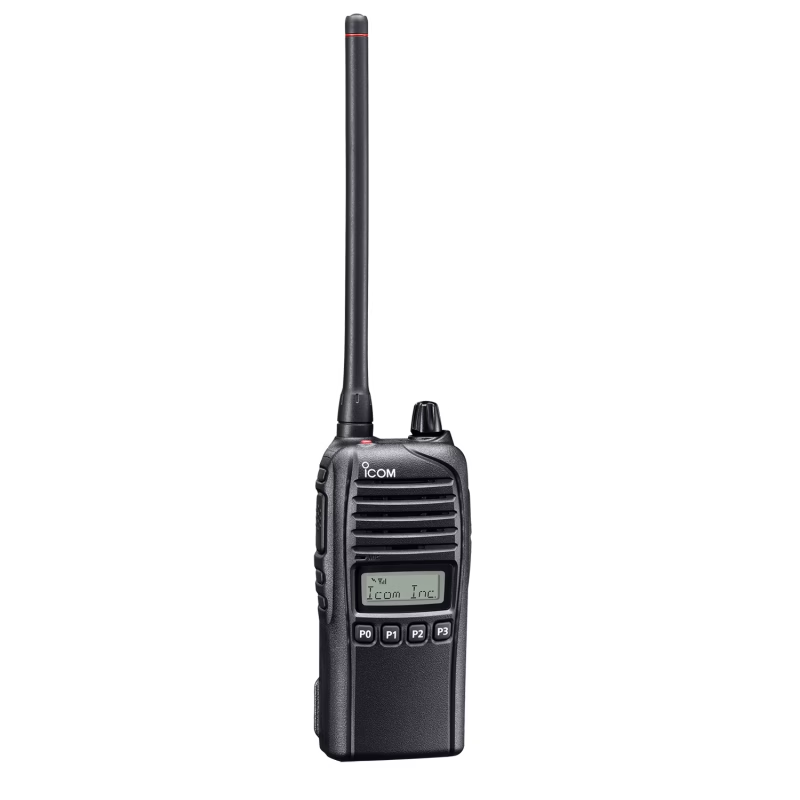
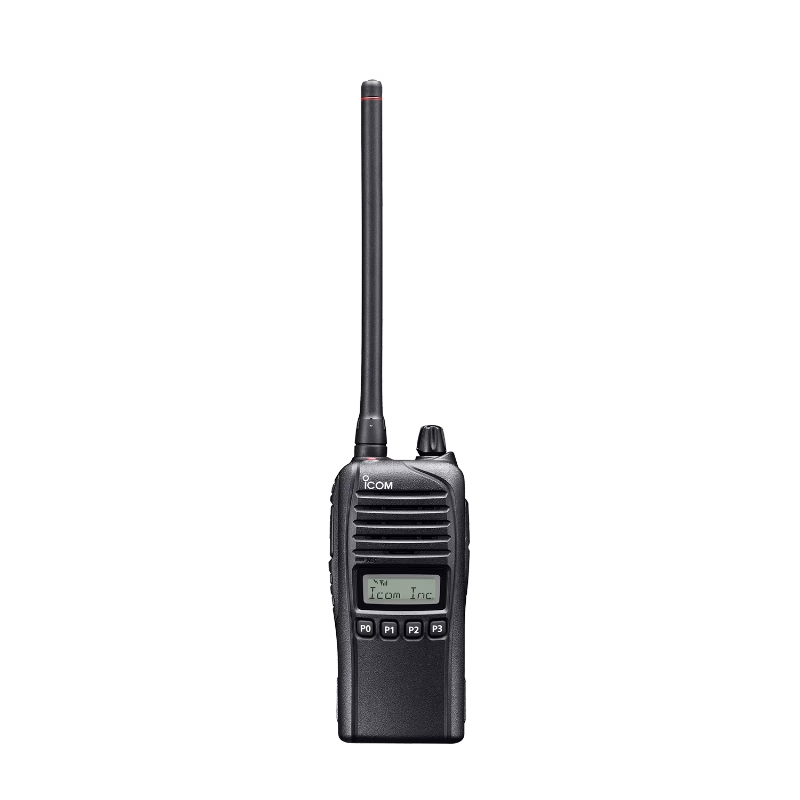
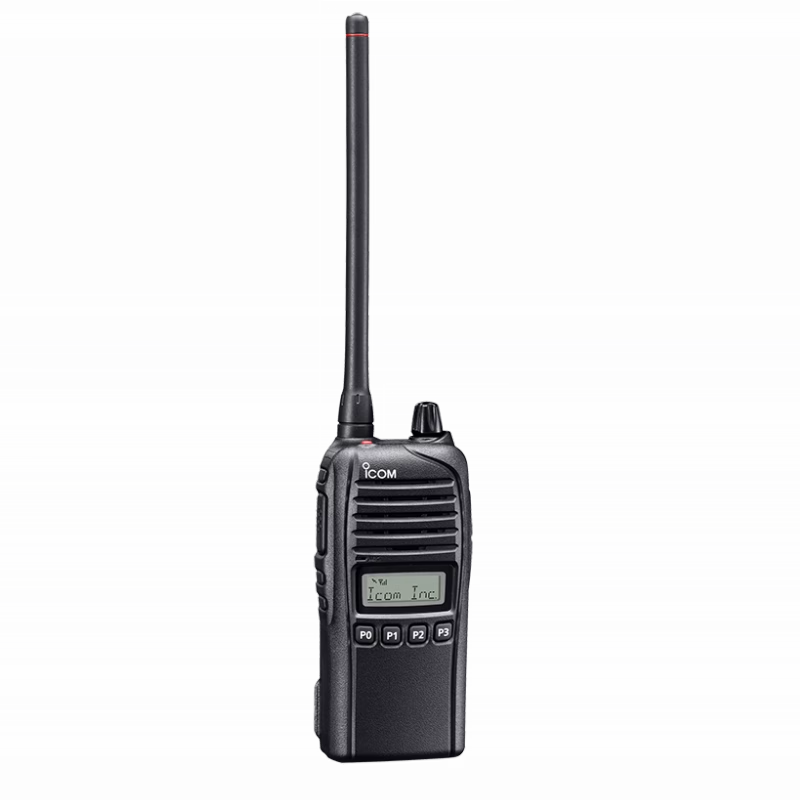
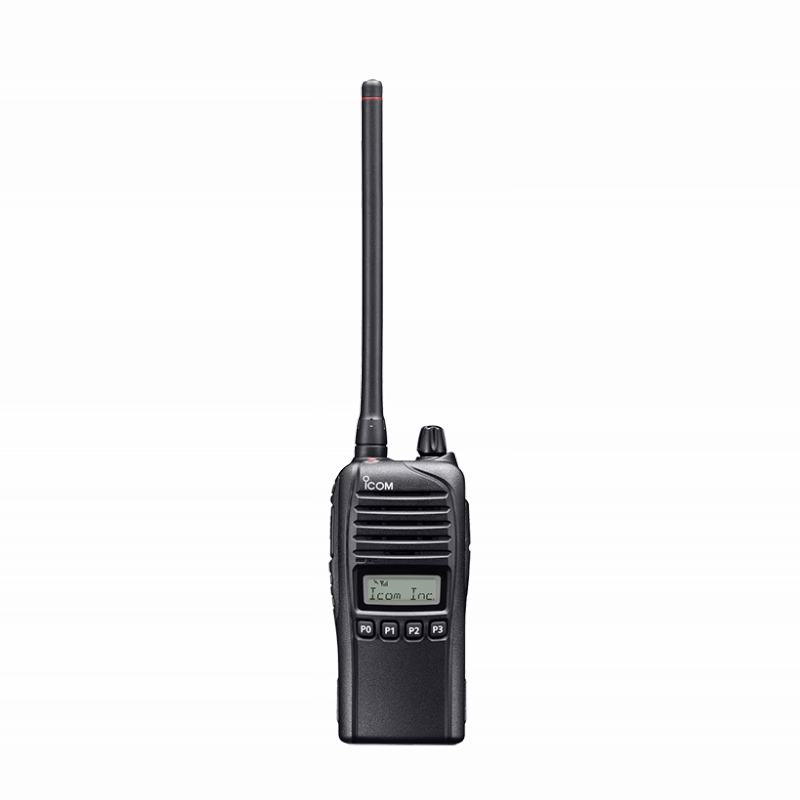
Icom IC-F3033 VHF Analog Handheld Radio 128 Channels
A professional 136-174 MHz analog radio with 128 channels across 8 zones and IP67 protection. It combines a BP-232WP battery, up to 17.5 hours of operation, PC programming, and fleet signalling options.
Original price was: $520.17.$494.10Current price is: $494.10. incl. VAT
Available on backorder
RISYS can programme and prepare devices before delivery. Contact us for quantity and project details.
Wholesale and project supply — up to 45% off

Fast shipping





Genuine warranty

Secure payment





B2B/B2C supply
Up to 45% off wholesale supply.
Overview
The Icom IC-F3033 VHF Analog Handheld Radio makes channel organisation the core of the buying decision rather than limiting a team to a small, unstructured set. It provides 128 channels across 8 zones, supported by an 8-character alphanumeric LCD that helps an operator distinguish a channel or group during a shift. The radio covers 136-174 MHz in Analog mode and offers 5 W, 2 W, and 1 W transmit levels. Its waterproof BP-232WP battery is a 7.4 V Li-ion pack rated at 2350 mAh typical, with operation reaching 17.5 hours under the defined duty cycle. This structure suits a security or facilities manager who wants to allocate channels by department or location, then use PC programming to maintain a common communications plan across the fleet.
Organising the Icom IC-F3033 VHF Analog Handheld Radio
The division of 128 channels into 8 zones is the defining operational strength of IC-F3033. A fleet coordinator can create a zone for a function, site, or team and place the relevant channels within it instead of giving every user one long undivided selection. The 8-character LCD provides room for a short alphanumeric name that helps staff confirm the chosen channel before transmitting. PC programmability supports a consistent configuration across multiple radios issued to guards, technicians, or operations staff. Channel spacing is 25 kHz or 12.5 kHz depending on the version, so the programming file should be tied to the actual radio version and the organisation’s authorised frequency plan. Used this way, the channel capacity becomes a management tool rather than only a specification-table figure.
Transmit Levels and Workplace Audio
The radio offers three transmit settings: 5 W, 2 W, and 1 W. A system planner can assign the appropriate level within the channel configuration and operating policy rather than treating maximum output as the automatic setting for every task. Typical audio output is 500 mW, providing the internal speaker reference when assessing listening at a gatehouse or operating area. The 136-174 MHz VHF coverage also places the unit within an analog VHF plan, not as a direct substitute for a digital fleet or another band. Its stated range is up to 3 km and should serve as a field-test benchmark at the site. Final coverage planning calls for trials along the actual routes between buildings, yards, and work positions before the device allocation is approved.
Signalling and Call Management
IC-F3033 supports 2-Tone, 5-Tone, CTCSS, DTCS, MDC 1200, and BIIS PTT ID. These options give a communications coordinator ways to build calls, groups, and transmit identities that match the system used by the fleet. Enabling every format simply because it is present is unnecessary; practical configuration starts with the base station and peer radios, then standardises the required settings through programming. A PTT identity can help a control position associate a transmission with a radio where the wider system supports that method, while the tone formats serve the organisation’s selected calling and separation plan. Because these functions depend on fleet configuration, an approved copy of each group setup and a post-programming transmit-and-receive test are useful controls before user handover.
Safety Functions for Remote Staff
The radio includes an emergency button and lone-worker function, with man-down available as an option. Those controls are relevant to guards and technicians working away from direct supervision, but an organisation also needs a response procedure for the alert to have operational value. The deployment plan can identify who receives an emergency transmission, how the control room recognises the sending radio, and what action follows. Man-down requires confirmation that the option is present and configured before it forms part of a safety process. This model is not for intrinsically safe applications, so hazardous-area requirements should be separated from its general operational deployment. These boundaries let an operations manager assess the safety controls as part of a tested workflow instead of treating the emergency button alone as a complete response plan.
Battery Planning Across a Shift
The waterproof BP-232WP is a 7.4 V Li-ion battery with a typical 2350 mAh capacity. Operating time reaches 17.5 hours under a 5:5:90 duty cycle with power save enabled, so buyers should compare that measurement basis with the site’s real traffic pattern. A shift with frequent transmitting will not mirror a test cycle dominated by standby, while the result may be relevant to teams using continuous monitoring and short transmissions. Asset planning can associate each pack with its radio, define the charging point between shifts, and require a battery check before issue. Power-save configuration should also form part of the fleet template when the stated operating time is used in the daily coverage plan.
Protection, Size, and Daily Carry
IC-F3033 carries an IP67 rating and MIL-STD-810F, both relevant to sites combining indoor duties with movement through yards or outdoor work areas. With the BP-232WP installed, dimensions are 53 x 120 x 37 mm and approximate weight is 310 g. Those figures provide a practical basis for selecting a carry position, cabinet layout, or equipment case, and they avoid comparing its weight with another radio measured without a battery. A supervisor can trial the radio with the team’s uniform before a wider issue and confirm that the emergency button and channel interface remain accessible. Environmental protection supports field use, while inspection, cleaning, and storage procedures remain part of managing the radio after each shift.
Saudi Sector Applications
At a large facility, channel zones can separate security, maintenance, operations, and service groups while keeping them inside one analog VHF plan. In warehouses and logistics yards, alphanumeric naming helps operators select the task channel as they move between gates and handling areas. Hotels and commercial complexes can assign zones to buildings or functions and use the supported signalling formats where they match the system design. Field-service teams can use the emergency button and lone-worker feature when a response procedure has already been established. The stated range of up to 3 km does not replace a site survey. Floors, corridors, yards, and guard positions should be tested in operation, followed by adjustments to channel and power settings based on the results.
IC-F3033 Within the Icom Family
IC-F3033 distinguishes itself from the sibling IC-V80 through its focus on a professional fleet organised into zones, with workplace signalling, an emergency button, and lone-worker support. IC-V80 is positioned as an amateur handheld, whereas IC-F3033 serves an organisation requiring centrally managed programming and channel allocation across operating groups. The two names are therefore not interchangeable even though both use VHF and Analog operation; user type, frequency plan, and device-management method remain decisive. The 8-character display and defined signalling set further support an operating model based on identifiable channels and calls. For procurement, the choice should start with fleet purpose, authorised frequencies, zone structure, and emergency procedure rather than the external shape of the handset.
Programming and Acceptance Before Rollout
Before service entry, the team should confirm the channel-spacing version, build the PC programming file, create names suited to the display, and assign output and signalling settings to each group. It can then test transmit, receive, audio, the emergency button, and lone-worker operation, along with man-down where that option forms part of the order. The BP-232WP and power-save configuration should be checked, with the physical device count reconciled against the charging plan. Measurements of 53 x 120 x 37 mm and 310 g with the battery can guide holder and storage preparation. Once testing is complete, each radio can be issued with its assigned zone, channel set, and emergency-response instructions, turning the broad configuration capacity into a controlled site tool.
Technical Specifications
- Brand
- Icom
- IP Rating
- IP67
- Channels
- 128
- Frequency Band
- VHF
- Power Output
- 5 W
- Radio Technology
- Analog
- Range
- 3 km
- Model
- ic-F3033
- Battery Details
- BP-232WP waterproof 7.4 V Li-ion, 2350 mAh typical
- Display
- 8-character alphanumeric LCD
Frequently Asked Questions
How many channels and zones does the Icom IC-F3033 provide?
It provides 128 channels across 8 zones, supported by an 8-character alphanumeric LCD.
What frequency range and output levels does it use?
It covers 136-174 MHz and offers 5 W, 2 W, and 1 W transmit levels.
What are the battery specification and operating time?
The waterproof BP-232WP is a 7.4 V, 2350 mAh typical Li-ion pack, with operation reaching 17.5 hours at a 5:5:90 duty cycle and power save enabled.
Which emergency functions are available?
The radio has an emergency button and lone-worker function, with man-down available as an option.
What are the protection rating and physical dimensions?
It carries IP67 and MIL-STD-810F; dimensions are 53 x 120 x 37 mm and approximate weight is 310 g with the BP-232WP.

Icom
Icom manufactures wireless communication equipment for land-mobile, amateur, marine and aviation use, plus wireless LAN, SIP telephony and marine navigation.
Browse brand productsShipping, Warranty and Regulatory
Delivery inside Riyadh
Clear warranty
Some devices or frequencies may require a permit or approval depending on the intended use and the regulations in force in the Kingdom. Requirements are clarified before project orders are fulfilled.
Customer Reviews
No ratings yet for this product
Only logged in customers who have purchased this product may leave a review.
Related Products
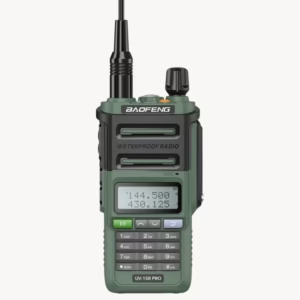
Baofeng UV-15R Pro Dual-Band Handheld Radio 128 Channels
On backorder
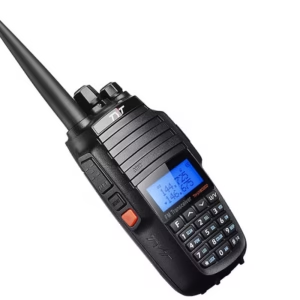
TYT UV-8000D Dual-Band Handheld Two-Way Radio
In stock — Delivery within 1–3 days
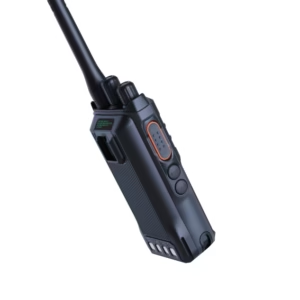
Hytera HP56X UL913 Intrinsically Safe DMR Radio
On backorder
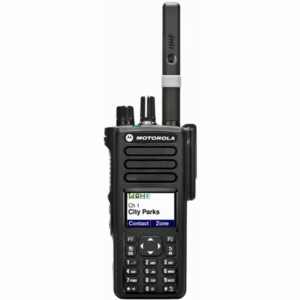
Motorola DP4800 DMR Two-Way Radio with IP57
On backorder
Reviews
There are no reviews yet.