
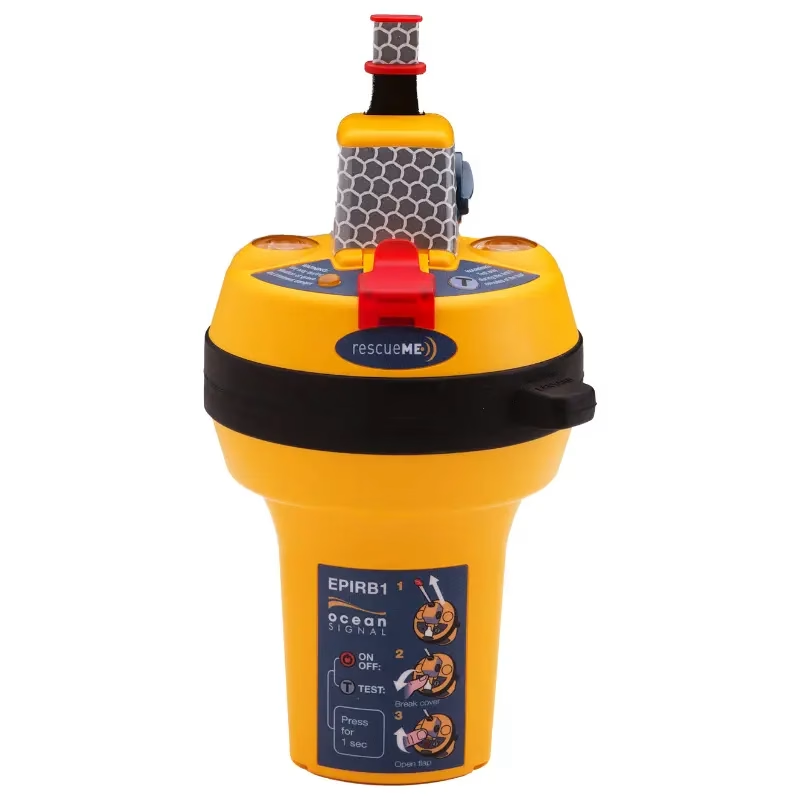
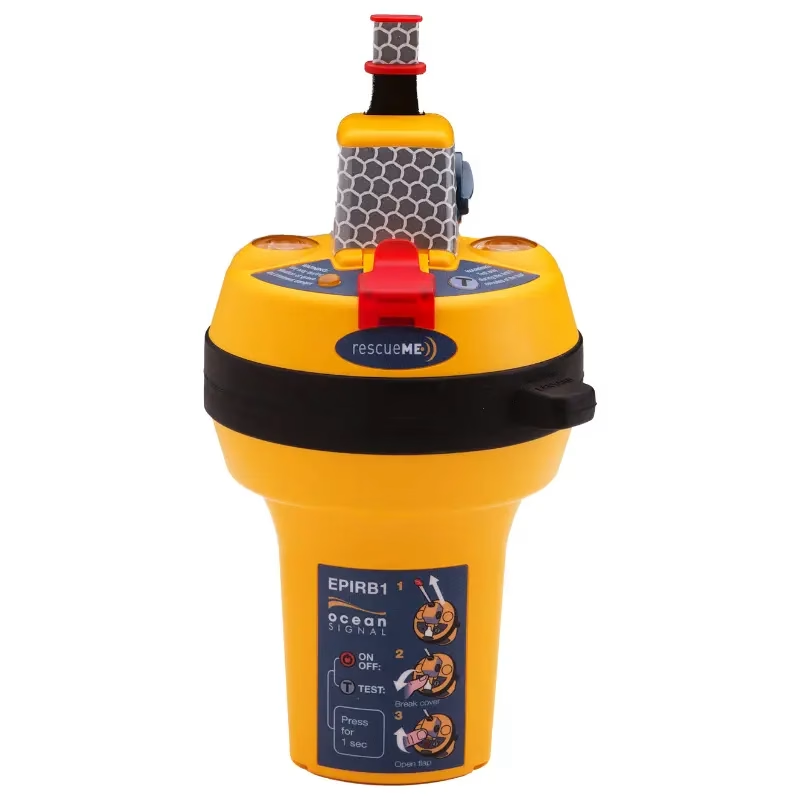
Ocean Signal EPIRB1 Marine Emergency Beacon with GPS
A marine beacon that sends distress alerts through 406.040 MHz and supports search-and-rescue homing on 121.5 MHz. It combines a 66-channel GPS receiver with over 48 hours of operation at -20°C.
Original price was: $705.42.$703.89Current price is: $703.89. incl. VAT
Available on backorder
RISYS can programme and prepare devices before delivery. Contact us for quantity and project details.
Wholesale and project supply — up to 45% off

Fast shipping





Genuine warranty

Secure payment





B2B/B2C supply
Up to 45% off wholesale supply.
Overview
The Ocean Signal EPIRB1 Marine Emergency Beacon gives a vessel a defined distress path when the safety of its crew or passengers is at risk. Its main practical benefit is the combination of a 406.040 MHz Cospas-Sarsat satellite alert, 121.5 MHz search-and-rescue homing, and position input from a 66-channel GPS receiver. After activation, these functions support the sequence from transmitting the alert and position to guiding responders toward the beacon. A dual high-intensity LED strobe adds a visual location cue during the search. The beacon operates for more than 48 hours at -20°C, making it a dedicated safety asset that should sit within a known marine emergency procedure rather than replace the crew’s routine communications equipment.
How the Ocean Signal EPIRB1 Marine Emergency Beacon Works
EPIRB1 uses three radio paths with distinct duties. The Cospas-Sarsat satellite link transmits at 406.040 MHz with a maximum output of 12 W EIRP and carries the distress function. The search-and-rescue homing beacon operates at 121.5 MHz with an output of 40 mW within ±2 dB, helping response teams home toward the beacon at closer range. NFC operates at 13.56 MHz as the near-field connection path. Position input comes from a 66-channel GPS receiver and a microstrip patch GPS antenna. Separating satellite alerting, local homing, positioning, and near-field connectivity helps a safety manager explain what each component contributes when writing the emergency process and briefing users.
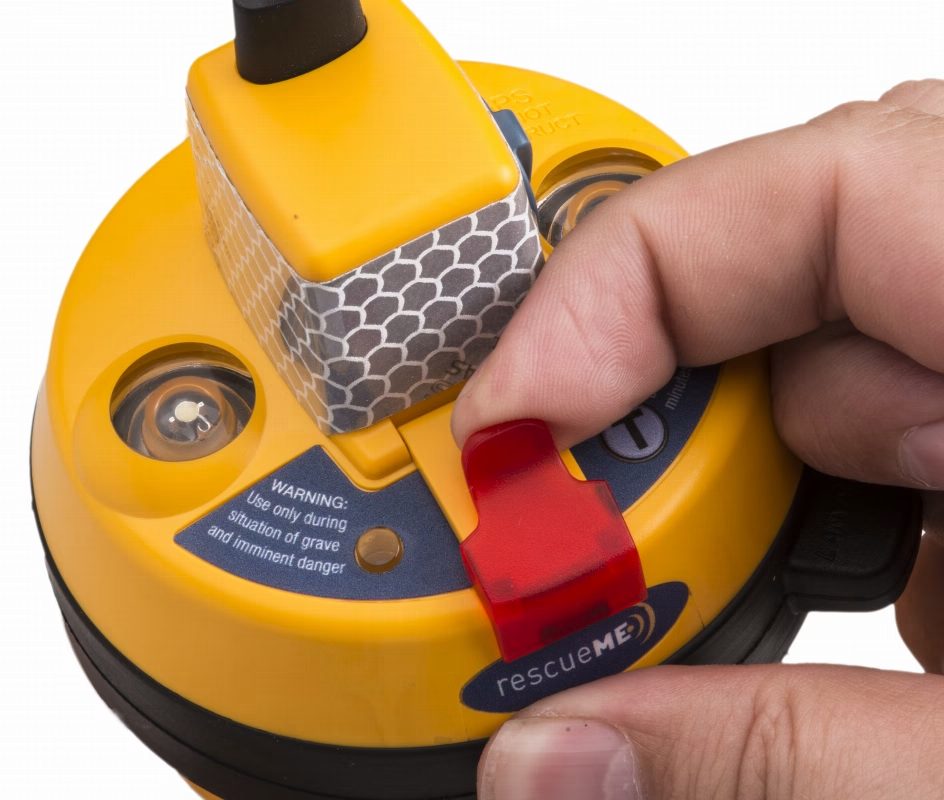
The dual high-intensity LED strobe supports visual detection at a rate of 20 to 30 flashes per minute. That cue becomes relevant when rescuers reach the area and need to identify the beacon alongside the 121.5 MHz homing transmission. The retractable antenna should be placed in its operating position as part of the beacon procedure, with the body and light positioned so they can work and remain visible. A secure lanyard provides a dedicated retention point while the unit is handled. These features define practical briefing topics for the crew: reaching the beacon, releasing it, extending the antenna, activating the unit, managing the lanyard, and recognising the separate roles of the strobe and radio paths.
EPIRB1 Fit for Saudi Marine Operations
EPIRB1 suits organisations operating vessels, boats, or crews away from immediate support and requiring a dedicated marine distress device within their safety plan. Managers responsible for coastal work, marine services, or professional voyages can include the beacon in pre-departure readiness checks, with a named role responsible for confirming that it remains in its manual mounting bracket and can be reached. Port and marine operations can connect its use to their evacuation and muster procedure. Crews working farther from a base gain several coordinated aids rather than a single search cue: the satellite link carries the alert, GPS supplies position, 121.5 MHz supports close homing, and the LED strobe assists visual identification.
The beacon is waterproof to 10 m, an important boundary for equipment that may enter the water during a marine emergency. Its operating temperature range is -20°C to +55°C, while storage extends from -30°C to +70°C. Asset managers can use those limits to select a suitable storage point in a vessel or equipment area and keep the unit within its stated environment before it is needed. EPIRB1 measures 178 x 89 x 100 mm and weighs 422 g. Those values help teams check bracket space, access, and inclusion in equipment records. Its installed location should remain visible and unobstructed, and the crew should know who retrieves it when the emergency procedure begins.
Where EPIRB1 Sits in the Safety and Communications Plan
EPIRB1 is an emergency position-indicating beacon, so its operational position differs from voice radios used for everyday team coordination. The selection case is not about talk groups or routine calls. It is about initiating a 406.040 MHz distress path, adding GPS position, and then supporting 121.5 MHz homing and visual detection. This makes the unit appropriate when an organisation wants the rescue function separated from normal working communications. The 66-channel GPS receiver is part of that emergency response chain rather than a feature for patrol or call management. Procurement comparisons should therefore evaluate EPIRB1 against the marine rescue procedure, the responsibility for access and activation, and the environment in which the beacon will be mounted.
The unit is supplied with a manual mounting bracket and manual release. Automatic activation in water applies only to Class 2 units. Units for Australia and New Zealand are Class 3, while units for other regions are Class 2. Procurement and operations teams should match the unit class to the region of use and write the procedure around its actual activation method. Even where water activation applies to the relevant class, access to the bracket, manual release, and user knowledge remain parts of readiness. A pre-movement safety check can cover the bracket, retractable antenna, lanyard, and strobe, while ensuring other equipment does not obstruct the beacon or delay its release.
Battery, Maintenance, and Asset Planning
The beacon uses a Lithium Manganese Dioxide (LiMnO2) battery with a 10-year replacement period. Replacement is also required after any activation, so use of the beacon must trigger maintenance before it returns to service. An asset manager can record the expected replacement date when the unit is issued and connect any activation event to a hold on redeployment until the battery has been replaced. The operational duration of more than 48 hours at -20°C gives emergency planners a defined transmission period at that temperature within the operating range. This duration should not be confused with the battery replacement interval: one governs emergency operation after activation, while the other governs the long-term maintenance cycle.
EPIRB1 is manufactured in the United Kingdom and carries Cospas-Sarsat type approval TAC 395. It meets Cospas-Sarsat T.001 and T.007, with test standards including IEC61097-2, EN 62368-1, EN 302 489, and RTCM SC11000-2. Safety and procurement teams can record those references exactly when matching the unit to internal project requirements, together with the approval class for the intended region. The standard warranty is 2 years and can be extended to 5 years through product registration. Deployment is completed by documenting the bracket location, EPIRB1 identity, battery date, class, and temperature limits, then training the crew on release, activation, antenna extension, lanyard handling, and the meaning of the alert, homing, and strobe functions.
Technical Specifications
- Brand
- Ocean Signal
- Power Output
- 5 W
- Model
- EPIRB1
- Battery Details
- Lithium Manganese Dioxide (LiMnO2)
Frequently Asked Questions
What does the Ocean Signal EPIRB1 do?
It sends a Cospas-Sarsat distress alert at 406.040 MHz, provides search-and-rescue homing at 121.5 MHz, and obtains position through a 66-channel GPS receiver.
How long does EPIRB1 operate after activation?
Its operational life is more than 48 hours at -20°C.
When must the EPIRB1 battery be replaced?
The replacement period is 10 years, and the battery must also be replaced after any activation.
Does EPIRB1 activate automatically in water?
Automatic water activation applies only to Class 2 units. Units outside Australia and New Zealand are Class 2, while units for those countries are Class 3.

Ocean Signal
Ocean Signal makes marine emergency beacons, electronic distress flares and AIS equipment for commercial, leisure, government and recreational users.
Browse brand productsShipping, Warranty and Regulatory
Delivery inside Riyadh
Clear warranty
Some devices or frequencies may require a permit or approval depending on the intended use and the regulations in force in the Kingdom. Requirements are clarified before project orders are fulfilled.
Customer Reviews
No ratings yet for this product
Only logged in customers who have purchased this product may leave a review.
Related Products
Thuraya Prepaid 20 Units Satellite Airtime Voucher
On backorder
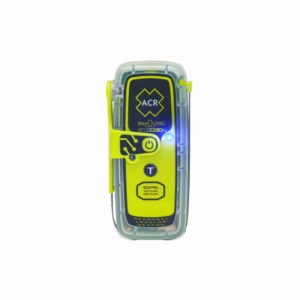
ACR Electronics ResQLink 410 RLS Buoyant Locator Beacon
On backorder
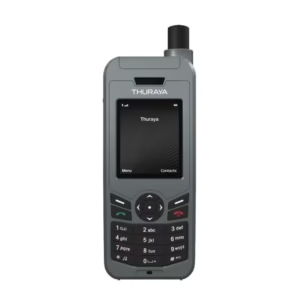
Thuraya XT-LITE L-Band Satellite Phone
On backorder

Thuraya SkyPhone Dual-Mode Satellite Smartphone IP67
On backorder
Reviews
There are no reviews yet.