
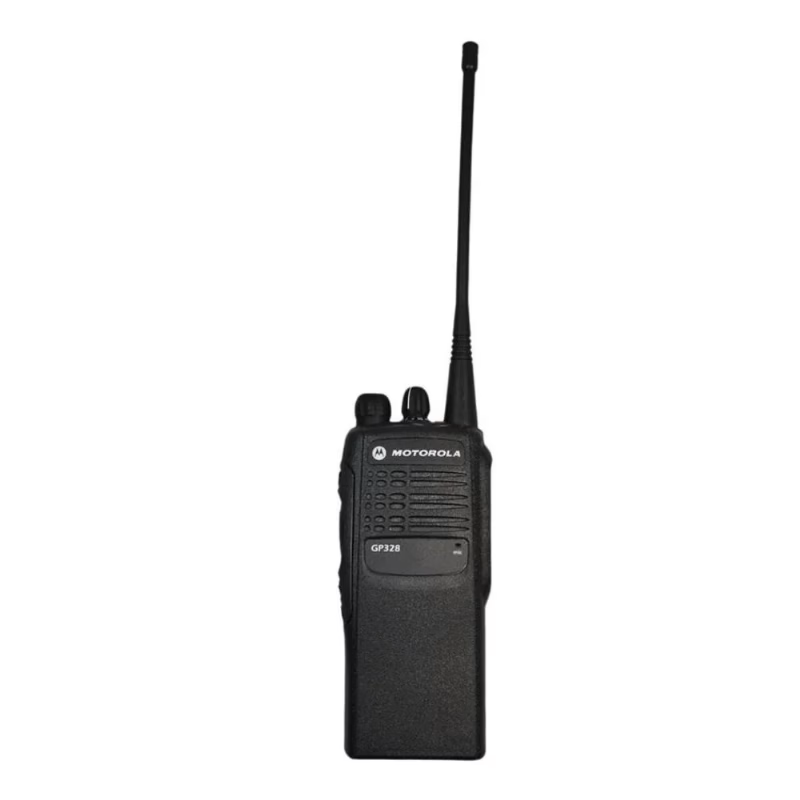
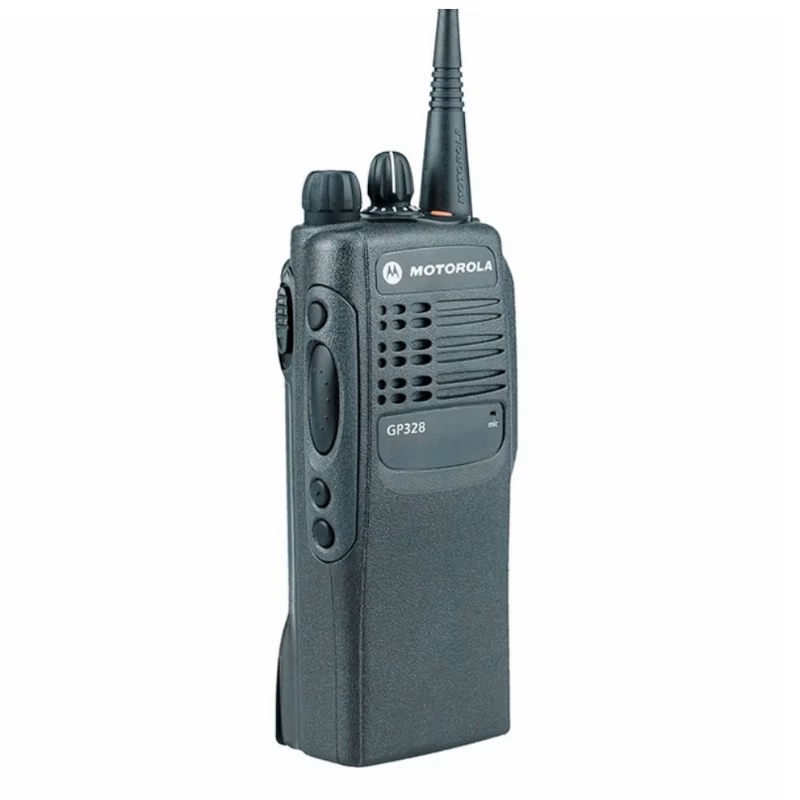
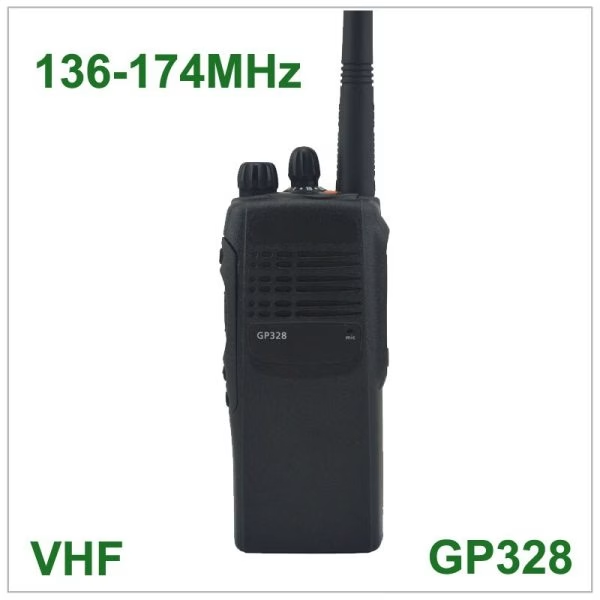
Motorola GP328 Analog Handheld Two-Way Radio VHF/UHF
An analog handheld available with 4 or 16 channels, VHF and UHF options, and output up to 5 W. It combines a display-free interface, IP54 protection, and NiCd, NiMH, or Li-ion battery choices.
Original price was: $702.35.$667.39Current price is: $667.39. incl. VAT
Available on backorder
RISYS can programme and prepare devices before delivery. Contact us for quantity and project details.
Wholesale and project supply — up to 45% off

Fast shipping





Genuine warranty

Secure payment





B2B/B2C supply
Up to 45% off wholesale supply.
Overview
The Motorola GP328 Analog Handheld Two-Way Radio makes channel capacity a version-level buying decision: it is available with 4 or 16 channels, depending on the model selected. That distinction helps a buyer match the handset to the actual number of teams and operating roles without giving users a channel plan broader than their work requires. Frequency options cover VHF at 136-174 MHz and UHF at 330-400 MHz for the 16-channel version, 403-470 MHz, or 450-527 MHz. Output reaches 5 W on VHF and 4 W on UHF, while IP54 protection supports routine field handling. With no display, GP328 is suited to organisations that can prepare a defined channel plan and issue each radio for a known role.
Operating the Motorola GP328 Analog Handheld Two-Way Radio
GP328 uses analog radio technology, so its practical value begins with translating the site’s team structure into clear programmed channels before the handsets are issued. Channels can be assigned to security, maintenance, operations, or supervision according to the selected version, followed by a short user briefing on the channel intended for each role. The absence of a display means users cannot rely on a visible channel name or on-screen menu while moving. Radio labels, a documented channel map, and a call test before each shift therefore become useful controls. This approach fits sites that value repeatable voice calls over menu navigation. Channel spacing supports 12.5, 20, and 25 kHz, giving the programming team specific settings to match when preparing the radio for the organisation’s approved analog communications plan.
Band selection must be made before programming and procurement. The GP328 range covers several defined VHF and UHF frequency options, and those options should not be treated as a single automatic match for every existing network. On a VHF configuration, documented transmit output reaches 5 W; on UHF, it reaches 4 W. A communications coordinator can test the chosen version along the real guarding routes, service corridors, plant rooms, loading areas, and yards used by the team, then lock in the appropriate channels and power setting. Higher output is not a substitute for coverage testing inside buildings, but it is a useful input when comparing configurations and defining the radio setup within the handset’s limits and the organisation’s authorised frequency plan.
Where GP328 Fits Saudi Business Sites
For facilities management, the lower-channel version can serve a compact team with stable duties, while the 16-channel version provides more room to separate maintenance, guarding, operations, and supervisors while retaining the same handset model. In warehouses and logistics sites, a pre-programmed plan can associate channels with receiving, storage, dispatch, or defined operating zones. The display-free interface keeps the user’s routine focused, provided the issue label clearly identifies the primary channel. Commercial and residential compounds can assign radios to fixed posts and mobile patrols, with calls tested in lifts, parking areas, corridors, and service spaces before acceptance. Event teams can similarly prepare channels by function before opening, then hand each user a labelled radio tied to a role rather than asking staff to navigate an unfamiliar menu during live operations.
The IP54 rating is relevant when planning work around dust and water spray during inspections, maintenance, or outdoor rounds. It does not replace correct storage and charging procedures, but it separates GP328 from equipment intended only for a protected desk position. Dimensions are 137 x 57.5 x 33.0-40.0 mm depending on the battery, and weight ranges from 350-500 g for the same reason. These changes are worth checking before accessories or carrying methods are standardised, because battery selection affects the fitted thickness and the load carried through a shift. An operations manager can trial the intended battery and carrying arrangement, then decide whether the configuration belongs with long patrols, fixed posts, or a shared pool passed between users.
Positioning GP328 Against Motorola Siblings
Compared with GP340, GP328 is distinguished by channel capacity that depends on the selected model version, allowing the buyer to choose a compact or broader configuration rather than assuming one capacity for every unit. The two names should not be treated as interchangeable labels when adding radios to an existing fleet. A GP328 decision requires the version, band, exact frequency range, and battery arrangement to match the units and programming already in service. Other named Motorola siblings may also follow different operating layouts or protection levels, so GP328’s analog identity, display-free interface, and version-dependent channel plan remain central to its position. It fits an organisation continuing a familiar programmed workflow, while any sibling comparison should begin with the site’s operational requirements rather than brand membership alone.
Battery, Shift, and Deployment Planning
GP328 uses a 7.5 V rechargeable battery and supports NiCd, NiMH, or Li-ion chemistry. Documented operating time is 8-14 h depending on the battery and power level under a 5/5/90 duty cycle. Battery selection should therefore be part of the radio configuration, not an afterthought separated from shift planning. A fleet manager can compare the real duty length with the selected chemistry and transmit setting, then define charging rotation and spare-unit quantities through an operational trial. Standardising the battery arrangement within one workgroup also reduces differences in weight, thickness, and runtime between handsets that otherwise look identical to users. Before issue, each unit can be checked for charge, tested with a call, and recorded with its assigned primary channel and battery configuration.
Procurement and Fleet Lifecycle Decision
GP328 is discontinued, which positions it more naturally for a defined existing-fleet or replacement requirement than for a new project that assumes an open product lifecycle. Procurement should match the full GP328 identity to the channel version, band, and battery configuration already held by the organisation, then connect the purchase decision to its maintenance, programming, and battery-management process. A physical check of current units is valuable because the difference between 4 and 16 channels, the available frequency ranges, and the battery options all affect whether another handset can enter service. Once matched, units can receive a controlled programming template, coverage testing along operating routes, and an asset record linking the battery to the radio. This makes the choice an executable compatibility decision rather than a purchase based only on a familiar model name.
Technical Specifications
- Brand
- Motorola
- IP Rating
- IP54
- Channels
- 4
- Frequency Band
- Dual Band (VHF/UHF)
- Power Output
- 5 W
- Radio Technology
- Analog
- Model
- GP328
- Battery Details
- NiCd, NiMH or Li-ion
- Display
- No display
Frequently Asked Questions
How many channels does the Motorola GP328 provide?
The GP328 is available with 4 or 16 channels, depending on the model version.
Which bands and transmit outputs does the GP328 cover?
It covers VHF at 136-174 MHz and UHF options at 330-400 MHz, 403-470 MHz, or 450-527 MHz, with up to 5 W on VHF and 4 W on UHF.
Which battery types and runtime does the GP328 support?
It uses a 7.5 V rechargeable NiCd, NiMH, or Li-ion battery and provides 8-14 h of operation depending on battery and power level under a 5/5/90 duty cycle.
Does the Motorola GP328 have a display?
It has no display, so teams benefit from preparing the channel plan and user briefing before issue.

Motorola
Motorola Solutions is a safety and security technology company making two-way radios, radio systems, video security and command-center software.
Browse brand productsShipping, Warranty and Regulatory
Delivery inside Riyadh
Clear warranty
Some devices or frequencies may require a permit or approval depending on the intended use and the regulations in force in the Kingdom. Requirements are clarified before project orders are fulfilled.
Customer Reviews
No ratings yet for this product
Only logged in customers who have purchased this product may leave a review.
Related Products
Baofeng UV-5R Dual-Band Handheld Two-Way Radio
In stock — Delivery within 1–3 days
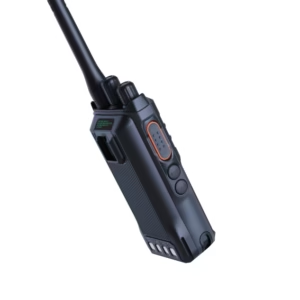
Hytera HP56X UL913 Intrinsically Safe DMR Radio
On backorder
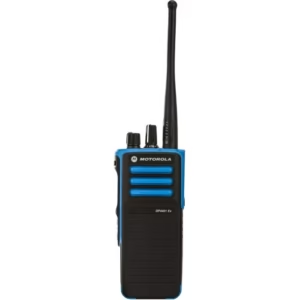
Motorola DP4401 Ex DMR Handheld Radio ATEX
On backorder
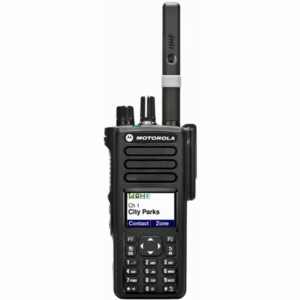
Motorola DP4800 DMR Two-Way Radio with IP57
On backorder
Reviews
There are no reviews yet.