
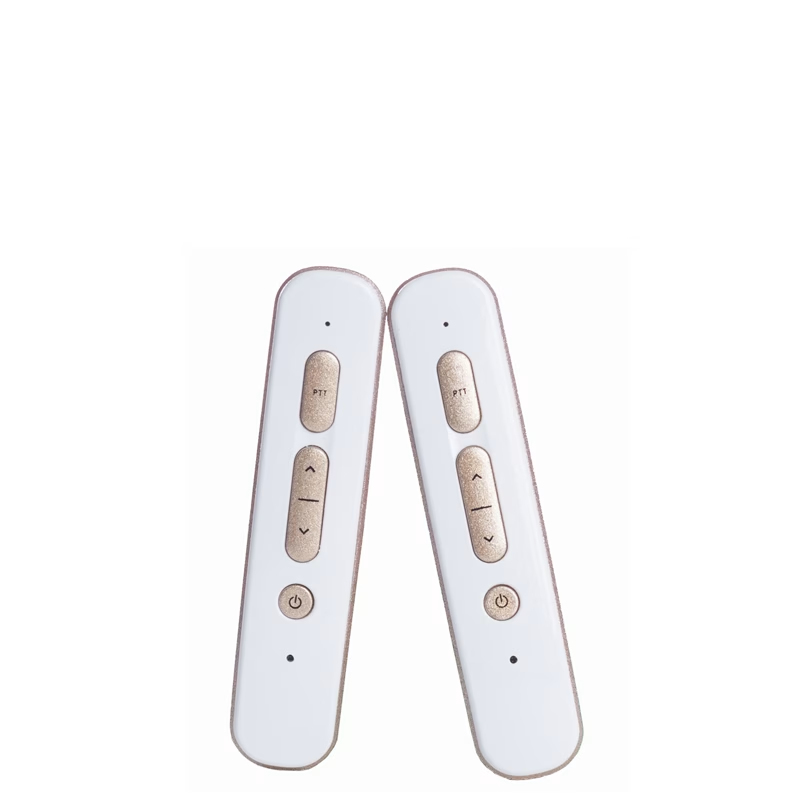
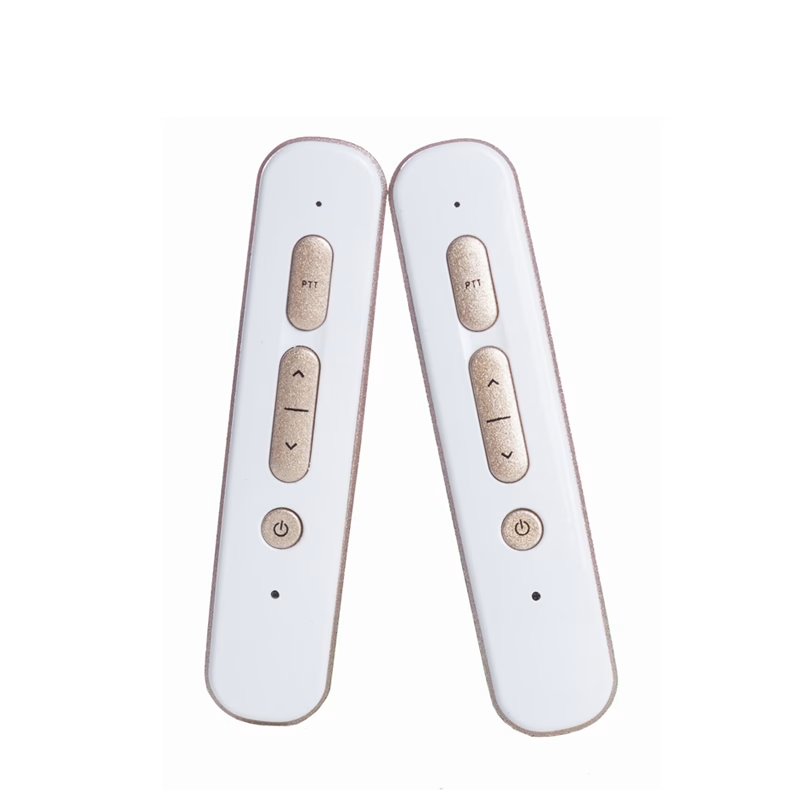
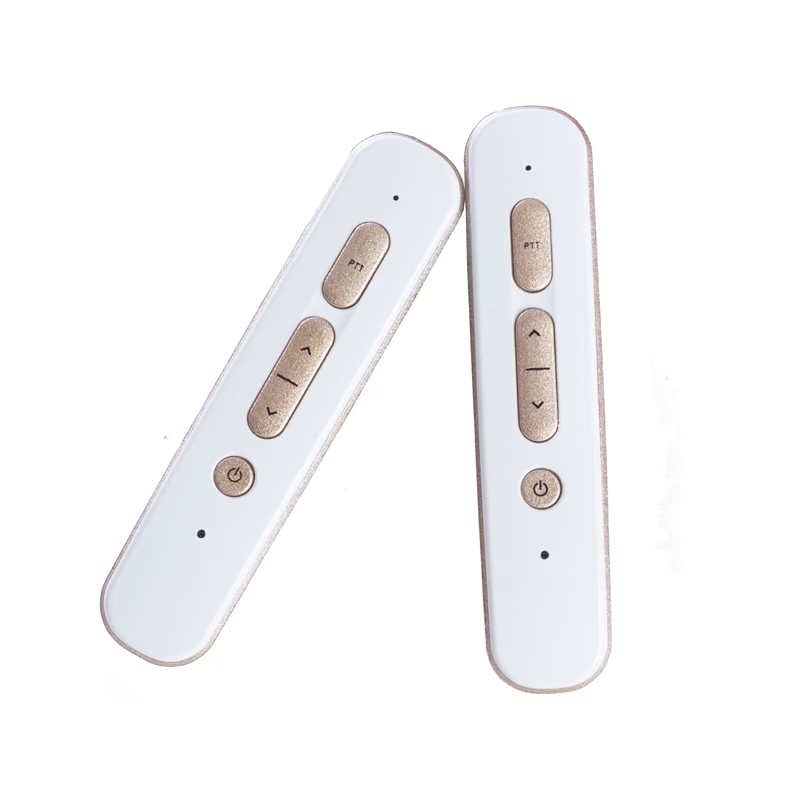
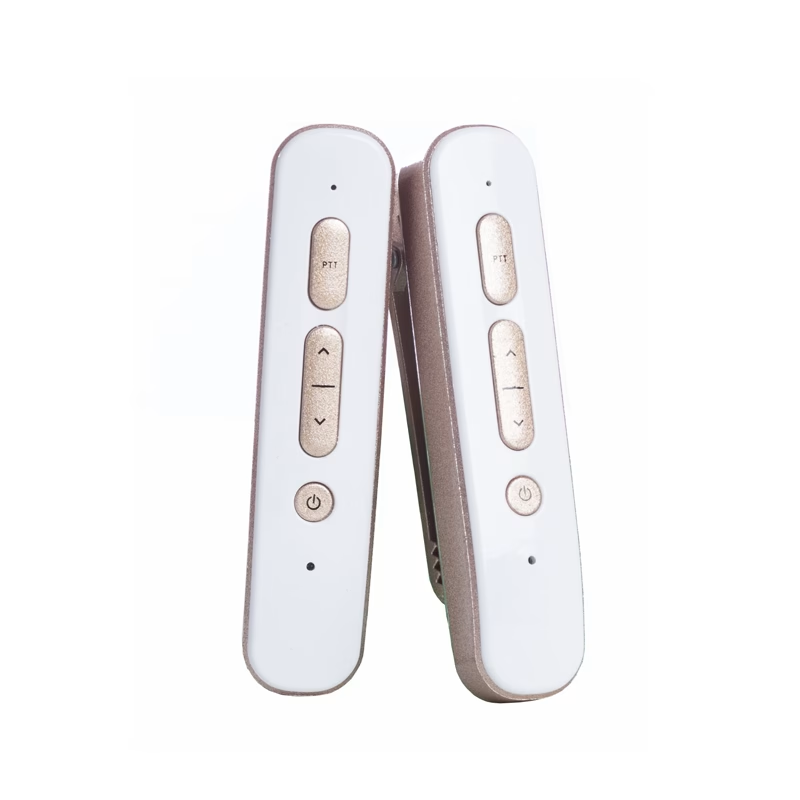
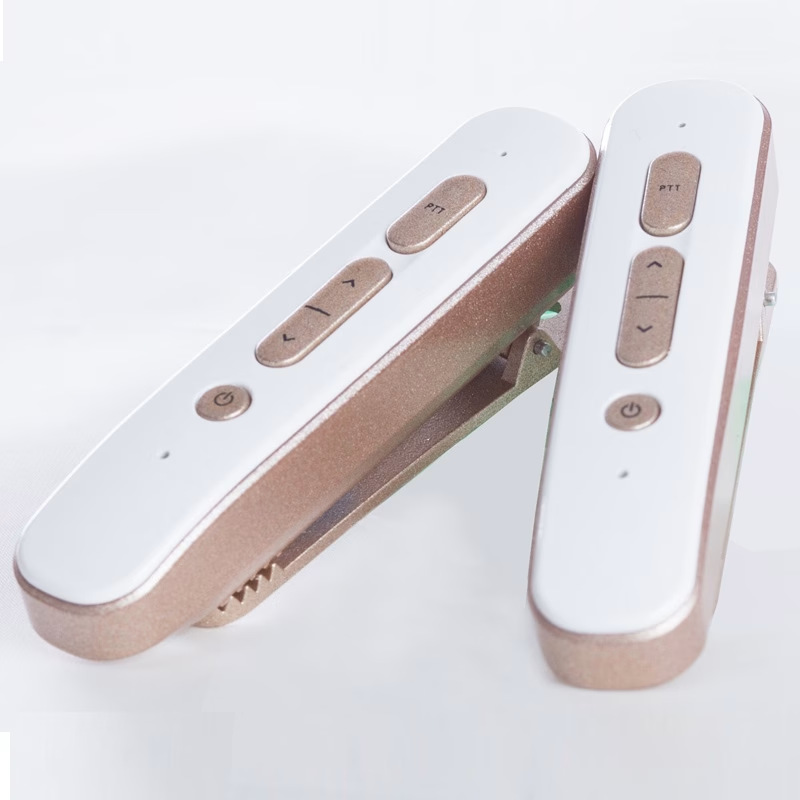
Yanton W1 Mini UHF Two-Way Radio
A compact analog FM radio operating across UHF 400-480 MHz with 1 W output, 20 channels, and a stated range of about 1 km. It supports USB charging and a micro earphone connector and weighs 95 g.
Original price was: 333.50 SAR.317.40 SARCurrent price is: 317.40 SAR. incl. VAT
Available on backorder
RISYS can programme and prepare devices before delivery. Contact us for quantity and project details.
Wholesale and project supply — up to 45% off

Fast shipping





Genuine warranty

Secure payment





B2B/B2C supply
Up to 45% off wholesale supply.
Overview
The Yanton W1 Mini UHF Two-Way Radio is built around close-range voice coordination in a compact format that can be assigned to site personnel. It measures 81 × 18 × 15 mm and weighs 95 g, giving operations managers defined size and weight references for shift equipment. The radio uses analog FM across UHF 400-480 MHz, provides 20 channels, transmits at 1 W, and has a stated range of about 1 km. Its central practical benefit is the combination of a small body and enough channels to separate routine site conversations by workgroup. USB charging and a micro earphone connector also let buyers plan a charging point and a personal-audio option as part of the preparation process before radios are issued.
How the Yanton W1 Mini UHF Two-Way Radio Supports Site Teams
The W1 provides two-way voice communication using different-frequency simplex or same-frequency simplex operation. In daily use, teams can follow a clear turn-taking procedure for speaking and listening on their assigned channel. The available 20 channels allow an organisation to structure workgroups around the site’s needs. Security, maintenance, reception, and supervision can be assigned separate channels when that arrangement fits the approved communications plan. A radio coordinator should configure units that need to communicate with compatible settings before they are issued. The 5 volume levels give users a defined adjustment range for the working area and site policy, while the 500 mW audio power output provides a technical reference during acceptance testing. UHF 400-480 MHz operation and 1 W output should be checked against the organisation’s communications plan and applicable requirements before deployment.
Compact Dimensions and Equipment Control
The 81 × 18 × 15 mm dimensions and 95 g weight define the W1’s selection position. These measurements let a facilities manager assess the space the radio occupies within an employee’s issued equipment and account for the added weight. Each unit can be recorded under the Yanton brand and W1 model, then linked to its assigned channel or operating group at handover. On return, the custodian can verify the radio identity, connectors, and physical condition before routing it to charging or storage. This process is useful at sites that distribute communications equipment at the start of a shift and recover it afterwards. A small radio still benefits from a clear asset identity and a documented handover. Receiving checks can use the stated dimensions and weight alongside the model name so staff do not rely on appearance or size alone when several devices are stored together.
Planning Channels and Testing the Stated Range
The W1 offers 20 channels and a stated range of about 1 km. For a buyer, the channel count supports workgroup planning, while the range figure provides a starting point for an on-site trial before wider issue. A security manager can select test positions that represent actual staff routes, including gates, corridors, service rooms, and loading areas, then confirm communication within the organisation’s building layout and operating pattern. The stated range helps position the W1 for the close distances required by the team, but the deployment decision should use results from the intended site. After testing, the organisation can document the approved channel for each role and set a concise call-and-response procedure to prevent conversations from crossing between workgroups. When several W1 units are deployed, they should be configured to the same approved plan and checked for transmission and reception on the intended channel before handover.
Applications Across Saudi Workplaces
Facilities departments can use the W1 for short-distance coordination between maintenance personnel, service rooms, and supervisors handling work requests. Security operations can divide channels between gates, patrol assignments, and a shift supervisor according to the site’s plan. Warehouses can separate receiving communication from loading movements or stock coordination, while retail sites and commercial complexes can assign a group to front-of-house staff and another to internal support. Event operators can include the compact radio in the issued equipment for coordinators and supervisors, with a defined channel for each operational role. Suitability in each setting depends on testing UHF 400-480 MHz operation and the stated range of about 1 km in the real environment, then configuring channels and calling procedures around the result. The W1 is an analog FM radio, so units intended to communicate with it need compatible operating settings and an aligned channel plan.
Charging and Personal Audio in the Deployment Plan
The W1 supports USB charging and operates at 3.7 V, giving supervisors useful identifiers when setting up an equipment preparation area. A charging position can be labelled for the model, and the organisation’s approved charging process can be completed before the radio is handed to a user. Model-based separation helps prevent the W1 from being mixed with devices that use different equipment. A micro earphone connector is also present, allowing procurement teams to include a suitable personal-audio accessory in their compatibility review when the working procedure calls for individual listening. Connector fit should be confirmed before accessories are ordered in quantity or issued. The radio and earphone can remain separate items in the asset record so the custodian knows what left and returned with each shift. Technical current references are ≤1000 mA when transmitting, ≤100 mA when receiving, and 20 mA in squelch standby, giving maintenance personnel defined values for operational checks.
Technical References for the Radio Coordinator
The W1 uses phase-lock frequency synthesis with frequency stability of ±2.5 ppm. Its modulation mode is F3E, with maximum frequency deviation of ≤5 kHz. These values support assigning channel configuration to the person responsible for the communications plan instead of allowing uncontrolled changes between users. Receiver sensitivity is less than 0.20 µV at 12 dB SINAD, and squelch sensitivity is less than 0.20 µV. Intermodulation interference is rated at 50 dB. A technician can retain these figures on the equipment record when comparing the radio with system requirements and conducting acceptance checks. Antenna impedance is 50 ohm, making the antenna path another defined checkpoint for technical review or maintenance. Together, these specifications give the radio coordinator concrete references for confirming W1 identity, reviewing settings, and preparing a group of units for shared operation before site testing.
Operating Environment and Receiving Checks
The W1 has an operating temperature range of -20°C to +55°C and carries an IPX4 protection rating. Site managers can use both fields when deciding where the radio will be assigned and can include an inspection of the body and connectors in shift handover routines. At receiving, the organisation can match the Yanton brand and W1 model, UHF 400-480 MHz range, 1 W output, 20 channels, 81 × 18 × 15 mm dimensions, and 95 g weight. The country of origin is China, and the warranty period is 1 year; both can be retained in purchasing and asset records. The communications team can then conduct a transmission and reception trial, check all 5 volume levels, verify the USB charging process, and confirm micro earphone connector fit if personal audio forms part of the deployment. This process ties the decision to the W1’s practical role: compact analog coordination for nearby site teams within a controlled issue, configuration, and testing procedure.
Technical Specifications
- Brand
- Yanton
- Warranty
- 1 Year
- Channels
- 20
- Frequency Band
- UHF
- Power Output
- 1 W
- Radio Technology
- Analog
- Range
- 1 km
- Model
- W1
Frequently Asked Questions
What are the frequency band and output power of the Yanton W1?
The W1 operates across UHF 400-480 MHz with 1 W output and analog FM technology.
How many channels does the W1 provide, and what is its stated range?
It provides 20 channels and has a stated range of about 1 km.
What are the dimensions and weight of the Yanton W1?
It measures 81 × 18 × 15 mm and weighs 95 g.
How is the W1 charged, and what is its protection rating?
It supports USB charging, operates at 3.7 V, and carries an IPX4 protection rating.

Yanton
Yanton makes PoC, DMR and analogue two-way radios, including portable and mobile units, compact belt-clip and ear-hook walkie-talkies, and repeaters.
Browse brand productsShipping, Warranty and Regulatory
Delivery inside Riyadh
Clear warranty
Some devices or frequencies may require a permit or approval depending on the intended use and the regulations in force in the Kingdom. Requirements are clarified before project orders are fulfilled.
Customer Reviews
No ratings yet for this product
Only logged in customers who have purchased this product may leave a review.
Related Products
Icom F62D UL Intrinsically Safe UHF Two-Way Radio
On backorder
Icom V86 VHF FM Handheld Radio 7 W
In stock — Delivery within 1–3 days
Hytera HP56X UL913 Intrinsically Safe DMR Radio
On backorder
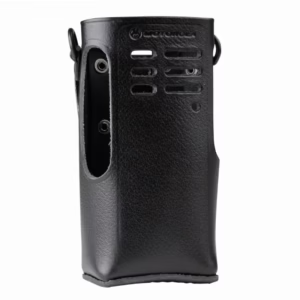
Motorola HLN9665A Leather Radio Case with Belt Loop
On backorder
Reviews
There are no reviews yet.